The Byzantine City of Dakhla Oasis: 200 Ostraca Bring Daily Life Into Focus
A planned fourth-century city at Ain el-Sabil in Dakhla Oasis includes a basilica, watchtowers, houses and nearly 200 Greek and Coptic ostraca.
What was announced in 2026?
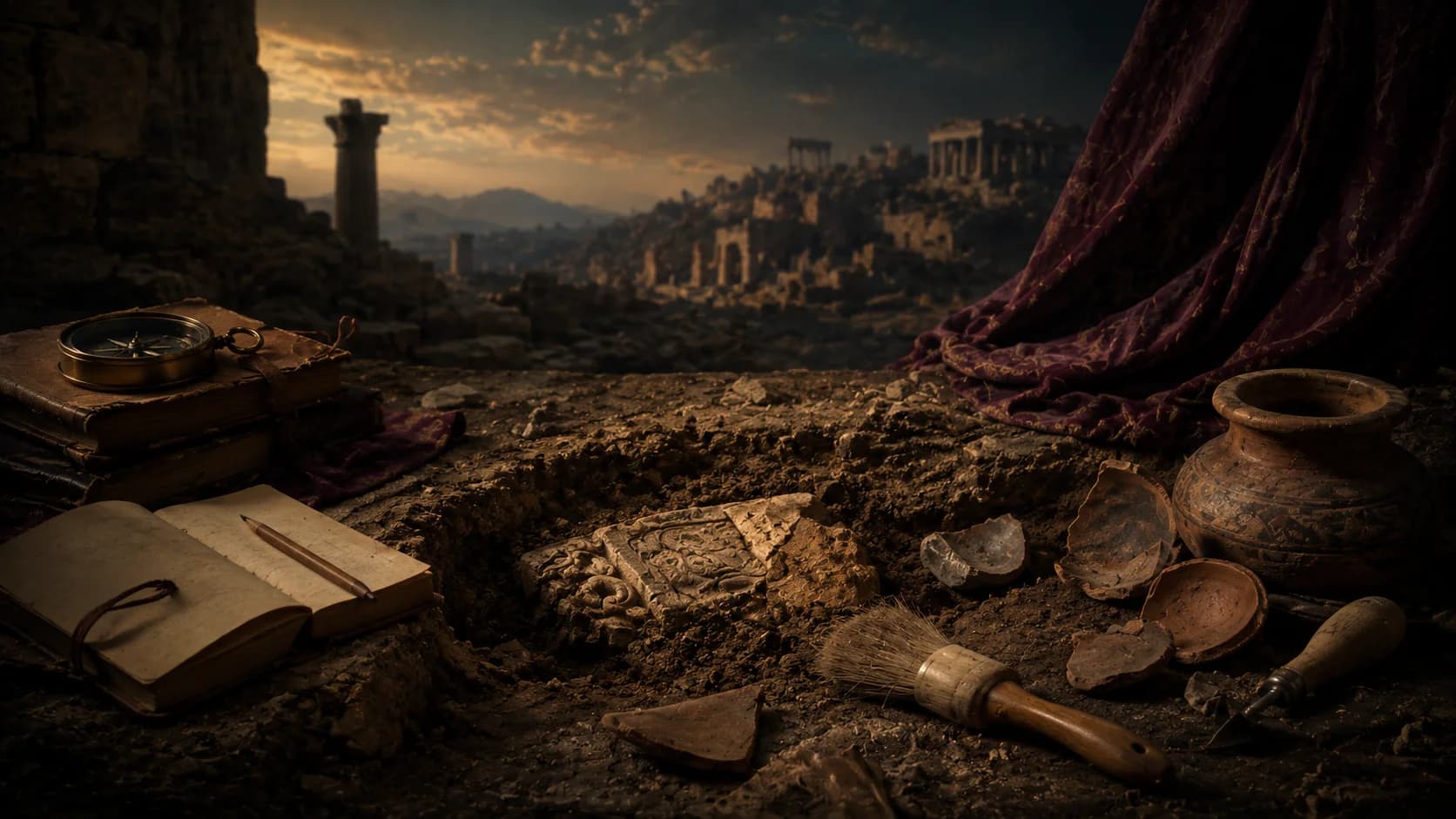
The Egyptian mission announced the discovery in July 2026 after excavation at Ain el-Sabil in Dakhla Oasis, in the Western Desert. The settlement was organized with streets, open squares and buildings arranged around a central basilica. Two watchtowers stood at the edge of the city. Preserved mudbrick architecture offers an unusually detailed view of late antique urban life away from the Nile Valley.
The houses contained reception rooms, vaulted roofs, cooking installations, grinding stones, lamps and bottles for oil or perfume. One residence was associated with a church deacon named Tisous. Another, linked with a person called Tabibos, may have served as a church before the basilica was built. The most informative assemblage consists of nearly 200 inscribed pottery fragments in Greek and Coptic.
The historical setting
Dakhla lay far from the Nile, but it was not isolated. Oasis routes moved crops, people, taxes and information across the desert. During late Roman and Byzantine rule, Christian institutions grew alongside local agriculture and imperial administration. The city provides a case study in how security, water, farming and religious organization worked together on a desert frontier.
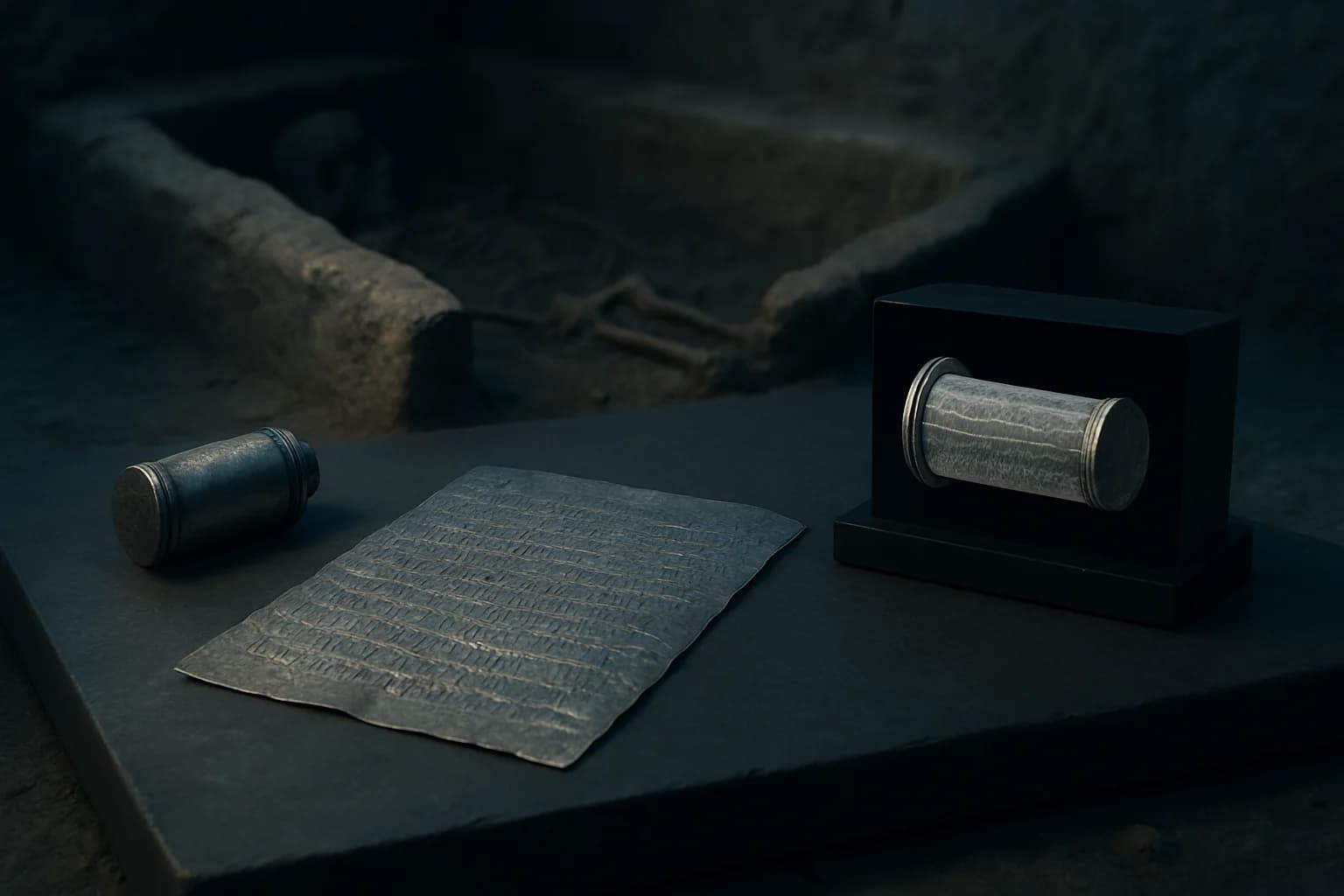
Ostraca are broken pottery fragments reused as inexpensive writing surfaces. Papyrus could be valuable, while a sherd was sufficient for a receipt, list, note or short letter. As a result, ostraca preserve the transactions and voices that formal chronicles often omit: purchases, debts, work arrangements, messages and small administrative decisions.
How researchers reached the conclusion
Each inscribed sherd is recorded by room and archaeological layer, photographed under varied lighting and studied for letter forms. Specialists in Greek and Coptic identify language, abbreviations, names and formulaic expressions. Ceramic fabric and matching edges can show whether fragments came from the same vessel. Spatial patterns may reveal whether the texts belonged to one household, office or dispersed rubbish deposit.
Gold coins from the reign of Constantius II, who ruled from 337 to 361, support a fourth-century phase. Architecture and ceramics provide additional dating evidence. The city was not necessarily built and abandoned in one event. A possible church predating the basilica indicates development through several phases, with domestic and religious spaces changing over time.
Why the discovery matters
Monuments show the public face of a city; ostraca reveal how it worked day by day. The basilica, houses, towers and written records together suggest that religious institutions were embedded in neighborhood life and the local economy. The discovery moves Byzantine Egypt beyond imperial theology and introduces people buying goods, grinding grain, sending messages and managing property.
Egypt’s dry climate has preserved exceptional archives of papyri and ostraca, but the Dakhla discovery is important for more than the number of texts. Because the sherds come from excavated architectural contexts, researchers may connect a record with a house, street or institutional space. That relationship between document and place is often lost in older collections.
What the evidence does not prove
Nearly 200 ostraca do not constitute the complete city archive. Preservation is selective, fragments may be illegible and many records were written on materials that did not survive. Written evidence also privileges literate actors and transactions. Archaeological objects, food remains and human biology are needed to approach people who left no text.
Headlines describe a “lost Byzantine city,” but the site was not a legendary metropolis suddenly found by accident. Archaeological discovery often means revealing a plan, chronology and social function through systematic excavation, not identifying a place that no local researcher knew existed. “Lost” is useful marketing language but a poor description of cumulative fieldwork.
Why the story is trending now
The story combines preserved streets with nearly 200 readable records, joining visual archaeology to individual human activity. It was announced during the same news cycle as the Marina el-Alamein golden tongue burials, putting Egyptian archaeology high in international coverage. Describing ostraca as “ancient messages” also gives audiences a direct connection with ordinary people.
Good coverage should mention houses and everyday tools alongside the basilica and towers. Until the corpus is published, detailed claims about every text should remain cautious. “Two hundred documents deciphered” is less accurate than saying that nearly 200 Greek and Coptic inscribed sherds were recovered and are being studied.
Questions that remain open
The texts may reveal which goods circulated, how visible women and children were, what economic roles church officials held and how the oasis connected with distant regions. Environmental analysis can reconstruct water use and farming. Combining houses, cemeteries and written records may also clarify population origins, health and mobility.
Publication of the ostraca will refine knowledge of local Greek and Coptic usage. Further excavation can test how regular the street grid was and what functions the towers served. In the long term, Ain el-Sabil may become a reference site for the household economy and documentary life of late antique desert towns.
A responsible way to read the headline
The first public announcement about the Byzantine city at Dakhla Oasis is a starting point rather than the final form of the research record. Headlines often compress excavation history, laboratory uncertainty and specialist debate into one sentence. Terms such as “first,” “oldest,” “proof” and “mystery solved” should therefore be checked against the sample size, dating range, archaeological context and the authors’ actual confidence level.
This article separates direct observation from interpretation. A fourth-century phase is supported by architecture and coins, but the detailed content of the ostraca should not be generalized before full publication. Later publications may refine the date, identification or social meaning without making the initial discovery worthless. A stronger revision will document the object or sample, explain the analytical steps and show why the new interpretation fits the wider archaeological record better than competing explanations.
How this fits wider archaeological research
The Byzantine city at Dakhla Oasis also illustrates a larger change in archaeology: spectacular objects are increasingly studied together with ordinary materials, spatial data, biological evidence and archival records. The result is a history built from networks of evidence rather than from one famous artefact. Context can reveal who used an object, how a settlement functioned, or whether a biological pattern was exceptional or part of a broader social system.
The public value of the story lies in more than novelty. It gives researchers a test case for questions about urban planning, Christian institutions, literacy and household economies in late antique Egypt. The most useful next step is not to force the find into a ready-made myth, but to compare it with securely dated parallels and to follow the publication trail as new data appear.
Frequently asked questions
What is an ostracon?
A broken pottery fragment reused as a surface for a note, receipt, list or short letter.
When did the city flourish?
The main evidence points to a fourth-century late Roman or Byzantine phase, with multiple stages of development.
Have all 200 texts been read?
Nearly 200 inscribed fragments were recovered, but detailed study and publication are continuing.
Source trail
Selected references and research starting points
- Archaeology Magazine: Byzantine city uncovered in Dakhla Oasis — Open source
- Smithsonian: Daily-life finds from the Dakhla city — Open source
The list is a research trail. Specific claims should be checked against the cited edition, object record or publication.
Keep exploring: Use the topic hub for closely related articles or browse the full archive instead of starting a new search.