Çatalhöyük: Life Inside a Neolithic Settlement Without Streets
Çatalhöyük’s closely packed houses, roof access, burials and wall art reveal a dense community that does not fit modern ideas of a city.
A settlement built house by house
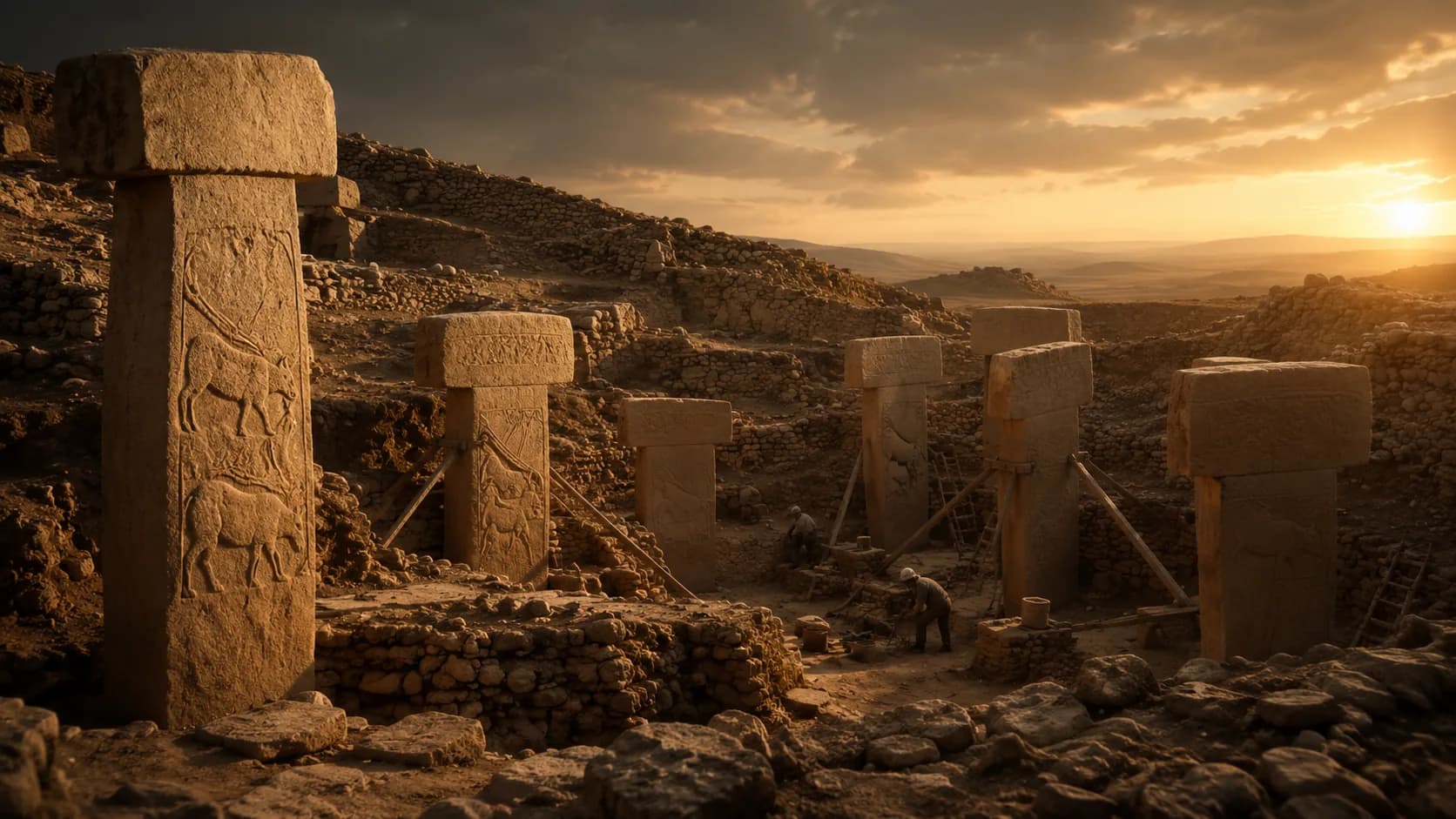
Çatalhöyük was not planned around palaces or public squares. Similar domestic units were rebuilt on the same plots, creating a deep mound. Interior platforms, hearths and storage spaces organized everyday life.
The absence of streets does not mean disorder. Roof movement and shared building customs created a different urban logic.
Burials beneath the floors
People buried selected dead beneath house platforms and later reopened graves. This practice connected ancestry, memory and domestic space. Not every individual received identical treatment, and bodies could be moved or rearranged.
The houses were therefore living spaces and places where relationships with the dead were maintained.
Wall paintings and animal installations
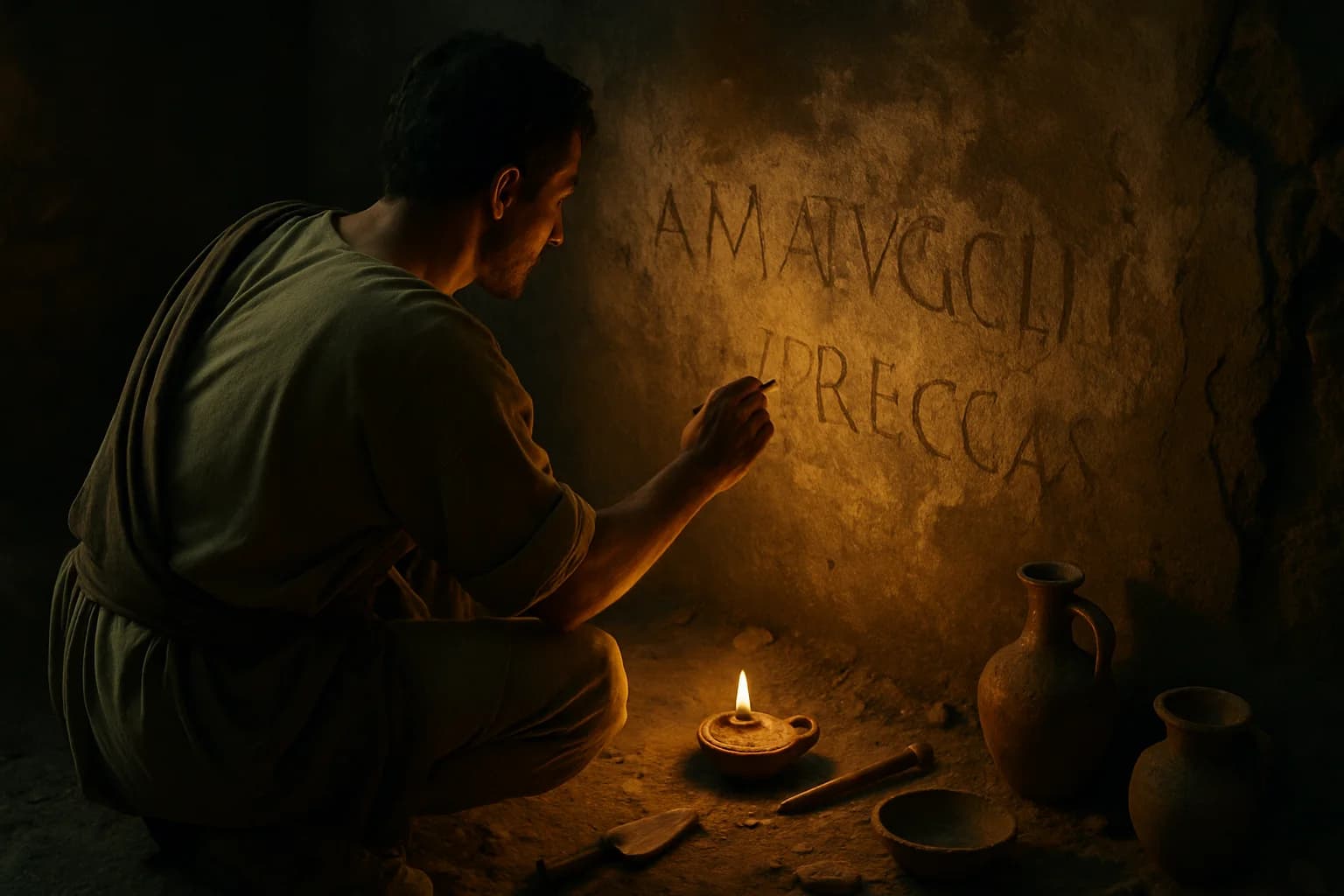
Painted walls, reliefs, bucrania and animal parts have encouraged dramatic religious interpretations. Some rooms had repeated symbolic elaboration, but archaeologists now avoid separating “shrines” too sharply from ordinary houses.
Ritual activity may have been embedded in domestic life rather than controlled by a separate temple class.
Was Çatalhöyük peaceful and equal?
Early popular accounts imagined a goddess-centered peaceful society. Later research shows a more complicated picture involving injury, disease, crowding and social difference. Evidence for hierarchy remains subtle compared with later states.
The site is important because it preserves long-term negotiation of community life before kings, armies and written law.
How archaeology turns a site into an argument
The central question in Çatalhöyük: Life Inside a Neolithic Settlement Without Streets cannot be answered by one photograph, quotation or isolated measurement. Archaeologists do not interpret a building or object in isolation. They record stratigraphy, associated finds, construction phases, later disturbance and the relationship between special spaces and ordinary settlement. For Çatalhöyük: Life Inside a Neolithic Settlement Without Streets, the most reliable explanation is the one that accounts for the entire site sequence rather than one spectacular room, stone or photograph.
Dating is also a chain of reasoning. Radiocarbon samples date organic material, not a stone wall directly. Pottery styles provide relative chronology, inscriptions can identify rulers or institutions, and geological processes can alter deposits. Each method has a range and potential sources of contamination. Strong conclusions emerge when independent methods converge.
Why context defeats many viral claims
Viral posts often remove scale bars, crop out surrounding structures or combine finds from different phases. Once context is restored, an “impossible” object may belong to a known workshop, an apparently sudden destruction may represent several events, and a mysterious chamber may have changed function over centuries. The evidence checkpoint for this article is therefore central: The settlement had no obvious street network in many phases; people likely moved across roofs and entered houses from above.
Reliable research begins with site reports and specialist syntheses such as UNESCO, Neolithic Site of Çatalhöyük, Ian Hodder, Çatalhöyük research publications and The Çatalhöyük Research Project archive. These sources may revise one another because excavation is cumulative. Revision is not evidence of concealment; it is the normal result of new trenches, improved dating and better comparison. A responsible article records what changed and why.
Questions to ask before accepting a reconstruction
Who excavated the feature, and under what recording standards? Is the proposed date based on material from a secure layer? Are there comparable sites nearby? Does the reconstruction distinguish surviving architecture from restored or imagined elements? Are alternative functions discussed? Applying these questions to Çatalhöyük, Neolithic, Anatolia prevents certainty from outrunning the evidence.
The lasting importance of Çatalhöyük: Life Inside a Neolithic Settlement Without Streets is not that it supplies one final mystery. It shows how communities built, adapted, abandoned and remembered places over long periods. Archaeology is strongest when it reconstructs those changing relationships rather than turning the past into a frozen scene created for modern expectations.
The limits of certainty
Every historical reconstruction has a confidence level. Some points in Çatalhöyük: Life Inside a Neolithic Settlement Without Streets rest on direct physical evidence or securely identified texts; others depend on comparison, restoration or probability. A responsible article does not flatten those levels into one voice. It distinguishes what is observed, what is inferred and what remains open. That distinction is especially important when a topic has become part of popular culture, because repeated certainty can make a weak claim feel stronger than the underlying record.
The statement “we do not know the exact answer” should not be confused with “all explanations are equally likely.” Evidence can eliminate proposals even when it cannot select one final solution. Chronology, material traces, grammar, site context and known historical practices place real boundaries around interpretation. In this case, the boundary is summarized by the article’s evidence checkpoint: The settlement had no obvious street network in many phases; people likely moved across roofs and entered houses from above.
How future evidence could change the picture
New discoveries could revise parts of this page. A securely excavated parallel object, a longer inscription, improved dating, a newly published archive or a successful experimental reconstruction might clarify disputed details. The important point is that useful new evidence must be documented well enough for independent researchers to inspect. A private photograph, anonymous translation or claim that the decisive object has disappeared cannot carry the same weight.
Updates should also be proportional. One new find may change a date or local interpretation without proving a global theory. The works listed in the source trail, including UNESCO, Neolithic Site of Çatalhöyük and Ian Hodder, Çatalhöyük research publications, provide a baseline against which later claims can be compared. When a new argument overturns an established view, it should explain the older evidence at least as well as the view it replaces.
Reader takeaway
The most useful conclusion from Çatalhöyük: Life Inside a Neolithic Settlement Without Streets is not a slogan but a method. Start with the surviving evidence, keep language and chronology visible, compare independent sources and label uncertainty. This approach protects curiosity from becoming credulity. It also gives ancient societies credit for their own institutions, beliefs and technical knowledge instead of treating them as empty spaces waiting for a modern mystery to fill.
Frequently asked questions
Was Çatalhöyük the first city?
It was a very large settlement, but definitions of city vary and it lacked many institutions of later urban states.
Did people worship a mother goddess?
Female figurines exist, but treating every example as one universal mother goddess is not supported.
Why was the site abandoned?
Occupation shifted and declined over time; environmental, economic and social factors likely interacted.
Source trail
Selected references and research starting points
- UNESCO, Neolithic Site of Çatalhöyük
- Ian Hodder, Çatalhöyük research publications
- The Çatalhöyük Research Project archive
The list is a research trail. Specific claims should be checked against the cited edition, object record or publication.
Keep exploring: Use the topic hub for closely related articles or browse the full archive instead of starting a new search.