
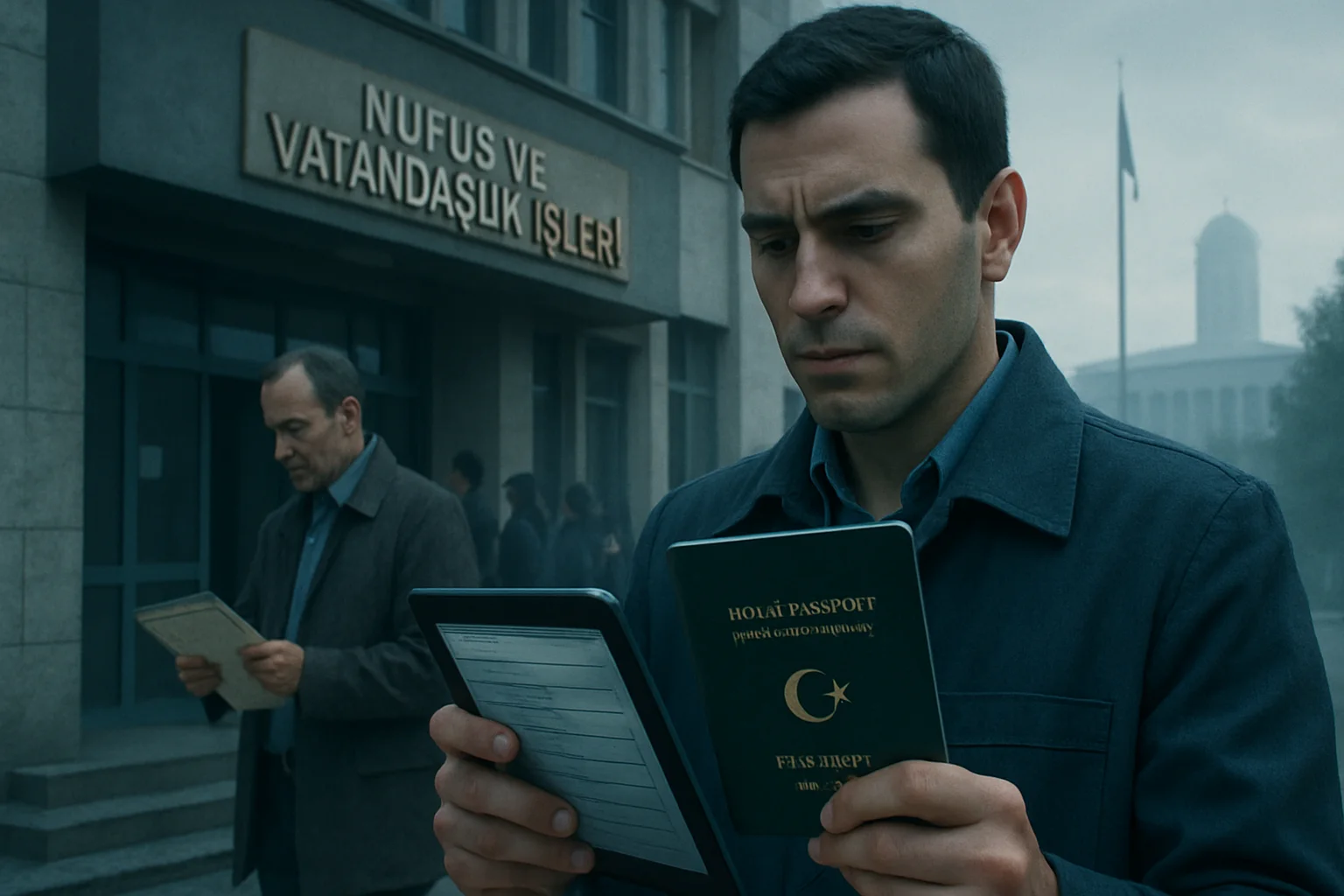
A ‘New Era’ for Green and Grey Passports: From Ottoman Travel Papers to Digital Applications
We analyse Turkey’s 2026 administrative and digital steps on green (hususi) and grey (service) passports, placing them in a historical line from Ottoman travel documents to today.
1. Why the headline now?
In summer 2026 several official steps—most notably the Ministry of National Education’s migration of passport application processes into an electronic workflow—triggered renewed public attention about who qualifies for green and grey passports and whether rights have changed. Government communications followed to clarify the situation. ([meb.gov.tr](https://www.meb.gov.tr/mebde-pasaport-basvuru-islemleri-elektronik-ortama-tasindi//haber/41260/tr))
2. What are green (hususi) and grey (service) passports?
In Turkish administrative terminology, the hususi damgalı passport (commonly called "green passport") is issued to certain classes of public servants, some retired officials, and qualifying exporter representatives. The hizmet damgalı passport ("grey passport") is granted to employees traveling abroad on official duty. These categories can carry different visa arrangements and administrative procedures compared with ordinary passports. ([pgm.ktb.gov.tr](https://pgm.ktb.gov.tr/TR-15414/yesil-pasaport-hususi-damgali-pasaport-devlet-memurlari-.html))
3. The origin of privilege: Ottoman-era precedents
Modern passport practices in the region trace to the Ottoman bureaucracy. Documents like the "mürur tezkire" and the 1867 regulations of the Passport Office laid institutional foundations that later Republican legislation built upon. These historical continuities explain why modern Turkish passport categories have deep legal and administrative roots. ([dergipark.org.tr](https://dergipark.org.tr/tr/pub/atad/article/1276978?issue_id=71388))
4. Institutional consolidation in the Republican era
After 1923, Turkish republican authorities codified passport categories and issuing authorities. Archival holdings in the Foreign Ministry show successive regulations and the creation of diplomatic, service and special passport types through the 20th century. Those documents demonstrate how early state-building shaped modern passport administration. ([diad.mfa.gov.tr](https://diad.mfa.gov.tr/default.tr.mfa))
5. Who qualifies — and why it varies
Eligibility for green passports has been expanded and contracted over time by ministerial and legislative action. Exporter-oriented allocations, for example, depend on Ministry of Trade criteria. Service passports for athletes, educators, and officials are subject to institutional requests and approvals, which can lead to varying implementation across federations and universities. ([ticaret.gov.tr](https://ticaret.gov.tr/duyurular/ihracatcilara-hususi-damgali-pasaport-verilmesi))
6. What the 2026 digitalisation actually did
The July 2026 announcement by the Ministry of National Education that certain passport applications would be handled electronically reflects a push for efficiency and record centralisation. It did not, according to official statements, eliminate the need for some in-person checks (family member entitlement checks, original documents at appointments), showing that digital workflows are being introduced alongside existing physical verification steps. ([meb.gov.tr](https://www.meb.gov.tr/mebde-pasaport-basvuru-islemleri-elektronik-ortama-tasindi//haber/41260/tr))
7. Why rumours spread — and how officials responded
Media and social posts claiming a wholesale end to green passport travel rights generated public concern. Official clarifications from government communication bodies stated there was no change to visa-free travel rights for existing green passport holders. The pattern—rapid public reaction followed by formal clarification—reflects how administrative changes are often misread in early reporting. ([iletisim.gov.tr](https://www.iletisim.gov.tr/turkce/haberler/detay/turkiyenin-yesil-pasaportla-seyahat-doneminin-bittigi-yonundeki-iddialara-iliskin-aciklama))
8. Historical parallels and public trust
Historically, shifts in passport regulation have accompanied diplomatic crises or major reforms. The current changes are administrative and technological rather than geopolitical. Nevertheless, transitions can produce confusion; historically informed, transparent communication helps maintain public trust when institutions change procedures. ([dergipark.org.tr](https://dergipark.org.tr/tr/pub/atad/article/1276978?issue_id=71388))
9. Practical guidance for rights-holders
People who believe they are entitled to a green or grey passport should: (1) consult the issuing institution’s official web pages and latest announcements, (2) keep both electronic confirmations and original documents for in-person verification at population directorates, and (3) exporters or federation-linked applicants should follow Ministry of Trade or federation guidance. Official NVI instructions remain the primary reference. ([nvi.gov.tr](https://nvi.gov.tr/kastamonu/hizmet-damgali-gri-pasaport))
Inference: The 2026 digitalisation effort aims at administrative efficiency and does not, on available evidence, change international visa arrangements for existing green passport holders—official clarifications support this interpretation. ([meb.gov.tr](https://www.meb.gov.tr/mebde-pasaport-basvuru-islemleri-elektronik-ortama-tasindi//haber/41260/tr))
10. Final assessment
The recent headlines reflect an administrative inflection point rather than a legal rupture. The long history of passport regulation in the territory now called Türkiye explains why changes attract attention: passport categories are embedded in institutional practice. Close reading of official sources and archival continuity helps separate substantive legal change from implementation-driven confusion.
Frequently asked questions
Who is eligible for a green (hususi) passport?
Green passports are issued to certain public servants, eligible retirees and qualifying exporter representatives; criteria are set by relevant ministries and institutions. ([pgm.ktb.gov.tr](https://pgm.ktb.gov.tr/TR-15414/yesil-pasaport-hususi-damgali-pasaport-devlet-memurlari-.html))
Does the 2026 digital application change visa rules?
According to official statements, the digitalisation of application processes does not alter visa-free travel rights for existing green passport holders. ([iletisim.gov.tr](https://www.iletisim.gov.tr/turkce/haberler/detay/turkiyenin-yesil-pasaportla-seyahat-doneminin-bittigi-yonundeki-iddialara-iliskin-aciklama))
Are all passport processes now fully online?
Not entirely; while some application steps moved online, important identity and entitlement checks still require in-person verification at population directorates. ([meb.gov.tr](https://www.meb.gov.tr/mebde-pasaport-basvuru-islemleri-elektronik-ortama-tasindi//haber/41260/tr))
Where should applicants look for authoritative information?
The Nüfus ve Vatandaşlık İşleri Genel Müdürlüğü (NVI), relevant ministry pages (e.g. Trade, Education) and official communications are the most reliable sources. ([nvi.gov.tr](https://nvi.gov.tr/kastamonu/hizmet-damgali-gri-pasaport))
Sources and further reading
- Hizmet Damgalı (Gri) Pasaport — Nüfus ve Vatandaşlık İşleri Genel Müdürlüğü (NVI), n.d. (site updated periodically)
- Yeşil pasaport (hususi damgalı pasaport) Devlet memurlarından kimlere verilir? — Kültür ve Turizm Bakanlığı - Pasaport Bilgi, n.d.
- Devlet-i Aliyye (Osmanlı) Pasaportu — Belgelerle Türk Turizm Tarihi — Anatolia: Turizm Araştırmaları Dergisi (DergiPark), 2022-01-01 (journal volume date)
- Diplomatic Archives / Passport items (1913, 1940) — Republic of Türkiye Ministry of Foreign Affairs — Diplomatik Arşiv, n.d.
- MEB'de pasaport başvuru işlemleri elektronik ortama taşındı — Millî Eğitim Bakanlığı (MEB) - Duyuru, 2026-07-01
- İletişim Başkanlığı — Yeşil pasaportla seyahat haklarında değişiklik olmadığına dair açıklama — T.C. İletişim Başkanlığı, 2026-07
Frequently asked questions
Who is eligible for a green (hususi) passport?
Green passports are issued to certain public servants, eligible retirees and qualifying exporter representatives; criteria are set by relevant ministries and institutions. ([pgm.ktb.gov.tr](https://pgm.ktb.gov.tr/TR-15414/yesil-pasaport-hususi-damgali-pasaport-devlet-memurlari-.html?utm_source=openai))
Does the 2026 digital application change visa rules?
According to official statements, the digitalisation of application processes does not alter visa-free travel rights for existing green passport holders. ([iletisim.gov.tr](https://www.iletisim.gov.tr/turkce/haberler/detay/turkiyenin-yesil-pasaportla-seyahat-doneminin-bittigi-yonundeki-iddialara-iliskin-aciklama?utm_source=openai))
Are all passport processes now fully online?
Not entirely; while some application steps moved online, important identity and entitlement checks still require in-person verification at population directorates. ([meb.gov.tr](https://www.meb.gov.tr/mebde-pasaport-basvuru-islemleri-elektronik-ortama-tasindi//haber/41260/tr?utm_source=openai))
Where should applicants look for authoritative information?
The Nüfus ve Vatandaşlık İşleri Genel Müdürlüğü (NVI), relevant ministry pages (e.g. Trade, Education) and official communications are the most reliable sources. ([nvi.gov.tr](https://nvi.gov.tr/kastamonu/hizmet-damgali-gri-pasaport?utm_source=openai))
Source trail
Selected references and research starting points
- Nüfus ve Vatandaşlık İşleri Genel Müdürlüğü (NVI), Hizmet Damgalı (Gri) Pasaport, n.d. (site updated periodically), Open source
- Kültür ve Turizm Bakanlığı - Pasaport Bilgi, Yeşil pasaport (hususi damgalı pasaport) Devlet memurlarından kimlere verilir?, n.d., Open source
- Anatolia: Turizm Araştırmaları Dergisi (DergiPark), Devlet-i Aliyye (Osmanlı) Pasaportu — Belgelerle Türk Turizm Tarihi, 2022-01-01 (journal volume date), Open source
- Republic of Türkiye Ministry of Foreign Affairs — Diplomatik Arşiv, Diplomatic Archives / Passport items (1913, 1940), n.d., Open source
- Millî Eğitim Bakanlığı (MEB) - Duyuru, MEB'de pasaport başvuru işlemleri elektronik ortama taşındı, 2026-07-01, Open source
- T.C. İletişim Başkanlığı, İletişim Başkanlığı — Yeşil pasaportla seyahat haklarında değişiklik olmadığına dair açıklama, 2026-07, Open source
The list is a research trail. Specific claims should be checked against the cited edition, object record or publication.
Keep exploring: Use the topic hub for closely related articles or browse the full archive instead of starting a new search.