
Hartapu and Türkmen‑Karahöyük: Tracing a Forgotten Anatolian King
From a 2019 Luwian inscription to TKAP’s 2024–2026 field seasons: how Türkmen‑Karahöyük and the Hartapu inscription are reshaping the political map of Iron Age Anatolia.
The stone that changed questions: the 2019 inscription
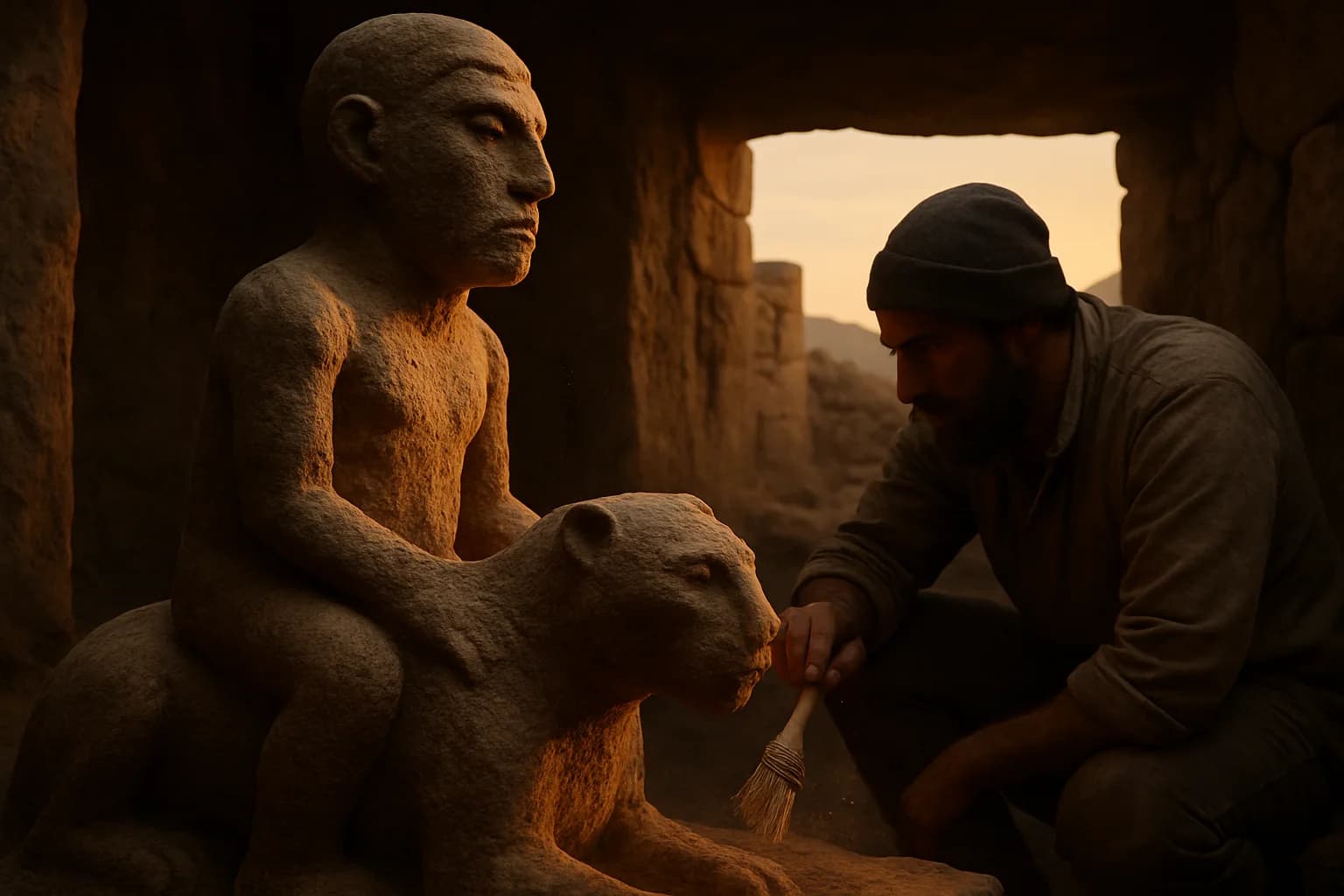
In 2019 a substantial stone block recovered from an irrigation channel on the Konya Plain drew rapid attention because of its Luwian hieroglyphic text. The inscription names a ruler, Hartapu, who styles himself a 'Great King' and claims victory over the Muška—a term often associated with Phrygia in historical readings. The find suggested that a previously neglected settlement may have been the centre of a regional polity.
Türkmen‑Karahöyük: size, continuity, and significance
Türkmen‑Karahöyük dominates the local landscape as one of central Anatolia’s largest tells, with visible stratigraphy that spans from the Early Bronze Age into the Hellenistic period. Surface survey and geophysical prospection indicate substantial urban phases—not merely episodic rural occupation—and raise the possibility that the tell served as a durable political hub in the Iron Age.
TKAP (2024–2026): project aims and early results
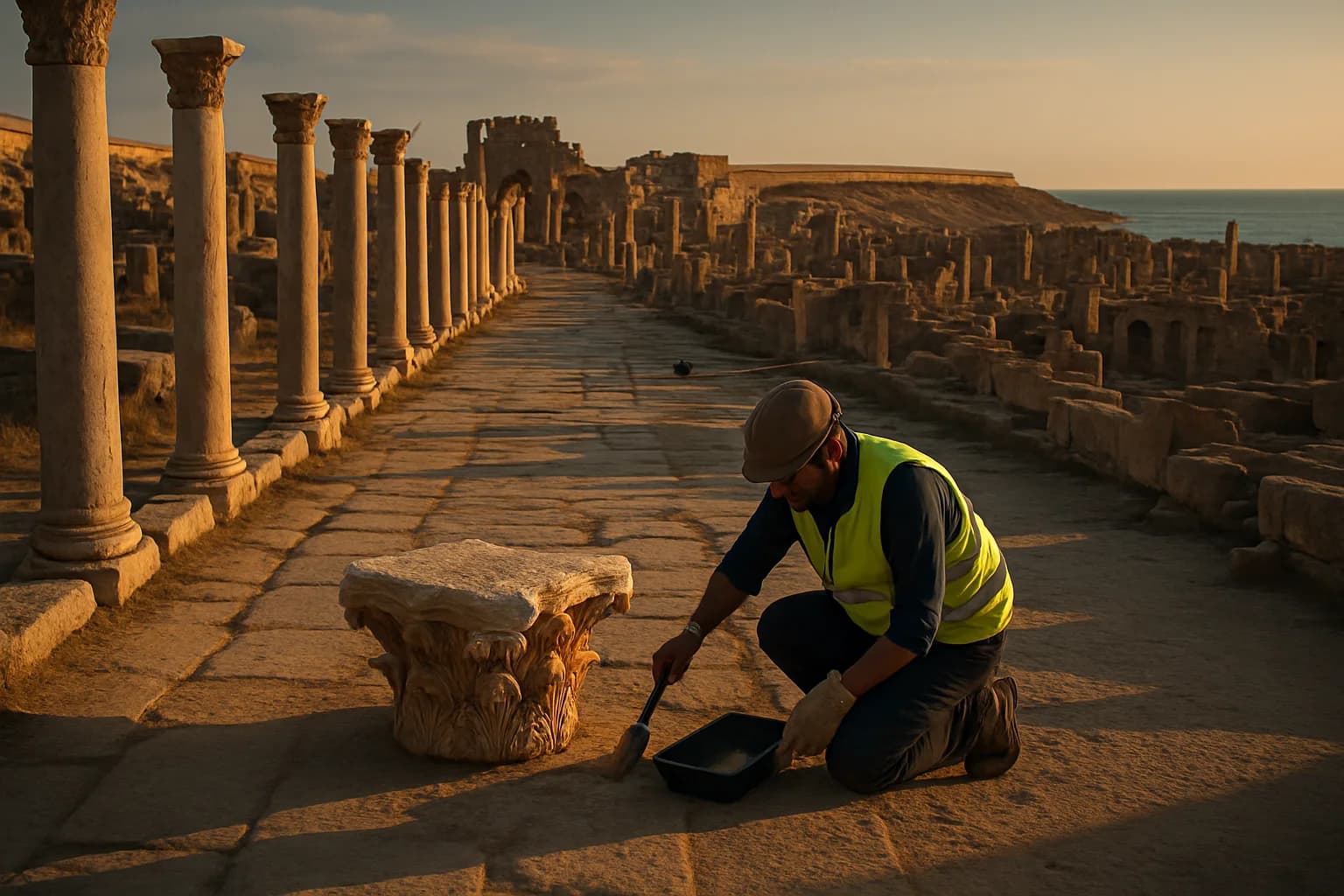
The Türkmen‑Karahöyük Archaeological Project (TKAP) began fieldwork in 2024 under a Bilkent University–University of Chicago partnership. The project’s multidisciplinary agenda includes architecture, ceramics, epigraphy, archaeobotany, zooarchaeology and conservation. Initial seasons have recorded architectural remains, administrative objects such as seals, and small finds that help place the inscription within a broader material culture.
Who was Hartapu? What does the inscription claim?
The inscription identifies Hartapu as a 'Great King' and asserts military success against the Muška/Phrygian sphere. Such a claim challenges older narratives that cast central Anatolia as merely the theatre of competition between Phrygia and the Neo‑Assyrian empire; instead, it points to indigenous state formation with its own diplomatic and military agency. Yet epigraphic texts alone cannot fix the full political map without supporting stratigraphic and dating evidence.
Evidence versus inference
Regional context: Phrygia, Assyria, and local kingdoms
Central Anatolia in the early first millennium BCE was not a simple two‑player game. Phrygia to the west and the Neo‑Assyrian Empire to the east were major forces; yet localized polities—like the one Hartapu might have headed—could assert independence and conduct campaigns. Understanding Hartapu’s realm matters for mapping how local elites negotiated power, identity and diplomacy in an age of imperial expansion.
Museum practices and modern technology
ISAC’s exhibition foregrounds methods as well as objects: Reflectance Transformation Imaging (RTI), high‑resolution 3D printing and digital imaging allow researchers and the public to examine worn or fragmented inscriptions in repeatable ways. The exhibition’s use of such technologies exemplifies current best practice in epigraphy and public archaeology, where preservation, accessibility and reproducibility are priorities.
Open questions and future research directions
Critical questions remain: was the inscribed stone produced in place or moved there later? What is the secure stratigraphic context for the inscription? How do ceramic sequences and radiocarbon dates from well‑dated contexts align with the language and paleography of the inscription? TKAP’s continuing seasons, integrated scientific analyses and regional survey will be essential to answer these queries.
Public engagement, heritage, and ethics
TKAP frames community engagement and conservation as central responsibilities. Transparent reporting, cooperation with Türkiye’s General Directorate of Cultural Heritage and Museums, and public exhibitions like ISAC’s allow new discoveries to be widely discussed while addressing concerns about illicit trade and context loss. Ethical stewardship remains part of the research agenda.
Concluding thought: how one inscription rewrites questions
Hartapu’s emergence from a canal stone into museum galleries and field reports shows how archaeology can overturn assumptions. A single inscription cannot by itself redraw the ancient map, but combined with methodical excavations and scientific testing it can prompt a necessary re‑reading of central Anatolia’s Iron Age. The coming seasons of TKAP and the broader scholarly conversation—now amplified by ISAC’s public exhibition—will determine how far Hartapu’s claim reshapes our historical map.
Frequently asked questions
Was the Hartapu inscription found at Türkmen‑Karahöyük?
The inscription examined in scholarship was recovered in 2019 from a canal in the Konya Plain; while linguistically Luwian, establishing the stone’s original in‑situ context requires further stratigraphic and contextual data from controlled excavations.
When did Hartapu likely rule?
Scholars generally place Hartapu in the broad Iron Age horizon (often argued around the 8th century BCE), but precise dating depends on coordinated stratigraphic evidence and radiocarbon results from the site.
What is TKAP and who leads it?
The Türkmen‑Karahöyük Archaeological Project (TKAP) is a collaborative excavation launched in 2024 by Bilkent University and the University of Chicago, co‑directed by Michele Rüzgar Massa and James Osborne.
Where and when is the ISAC exhibition?
ISAC’s special exhibition 'Hartapu: The Forgotten King of Anatolia' opened at the Institute for the Study of Ancient Cultures (University of Chicago) on 17 September 2026; program details and lectures are listed on ISAC’s website.
Sources and further reading
- Hartapu: The Forgotten King of Anatolia — Institute for the Study of Ancient Cultures (ISAC), The University of Chicago, 2026-09-01
- Hartapu: The Forgotten King of Anatolia — Special Exhibits — Institute for the Study of Ancient Cultures (ISAC), The University of Chicago, 2026-09-01
- Türkmen‑Karahöyük Archaeological Project (TKAP) — Bilkent University, Department of Archaeology (project page), 2026-08-20
- New Exhibition Tells the Story of Hartapu, the Forgotten Anatolian King Who Claimed Victory over Phrygia — Anatolian Archaeology (news), 2026-09-02
- Türkmen‑Karahöyük Archaeological Project — ISAC Annual Report (PDF) — Institute for the Study of Ancient Cultures, University of Chicago, 2025-10-01
- ISAC Exhibit Lecture: Great King Hartapu and Beyond — Event listing — Eventbrite / ISAC, 2026-08-25
Keep exploring: Use the topic hub for closely related articles or browse the full archive instead of starting a new search.