An 11,000‑Year‑Old Human‑on‑Leopard Statue at Karahantepe: Rethinking Neolithic Iconography
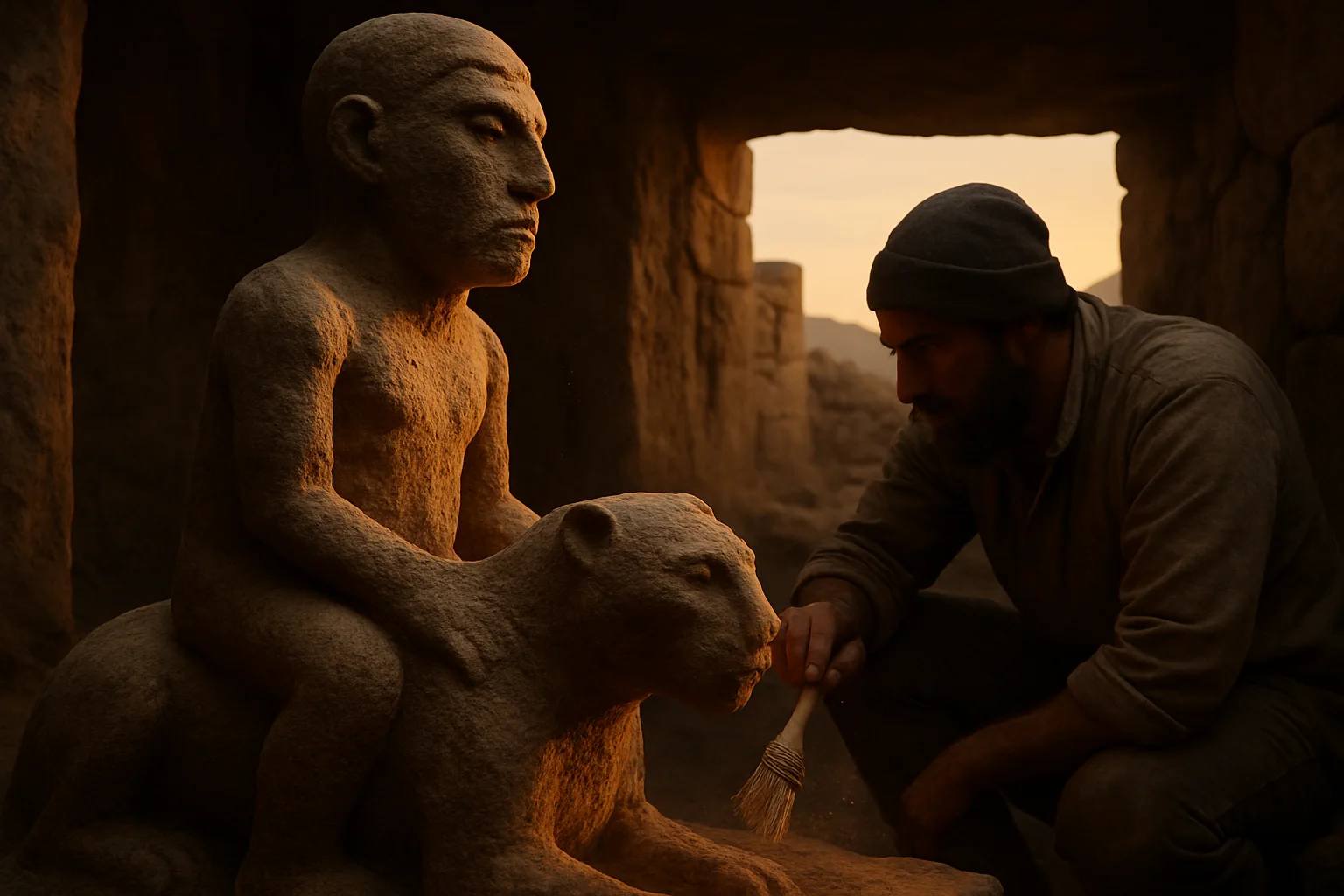
A recently unearthed 11,000‑year‑old statue from Karahantepe showing a human seated on a leopard raises fresh questions about ritual practice, three‑dimensional sculpture and human–animal imagery in early Neolithic Anatolia.
Why this discovery matters
Announced in late August 2026, the Karahantepe sculpture is notable because three‑dimensional composite depictions of human figures mounted on animals are rare for the early Neolithic of southeastern Anatolia. Found on a small stone‑floored structure’s bench, the work adds a new form to the region’s well‑documented repertoire of stone carvings and monumental work associated with the Göbekli Tepe horizon.
Archaeological context and recovery
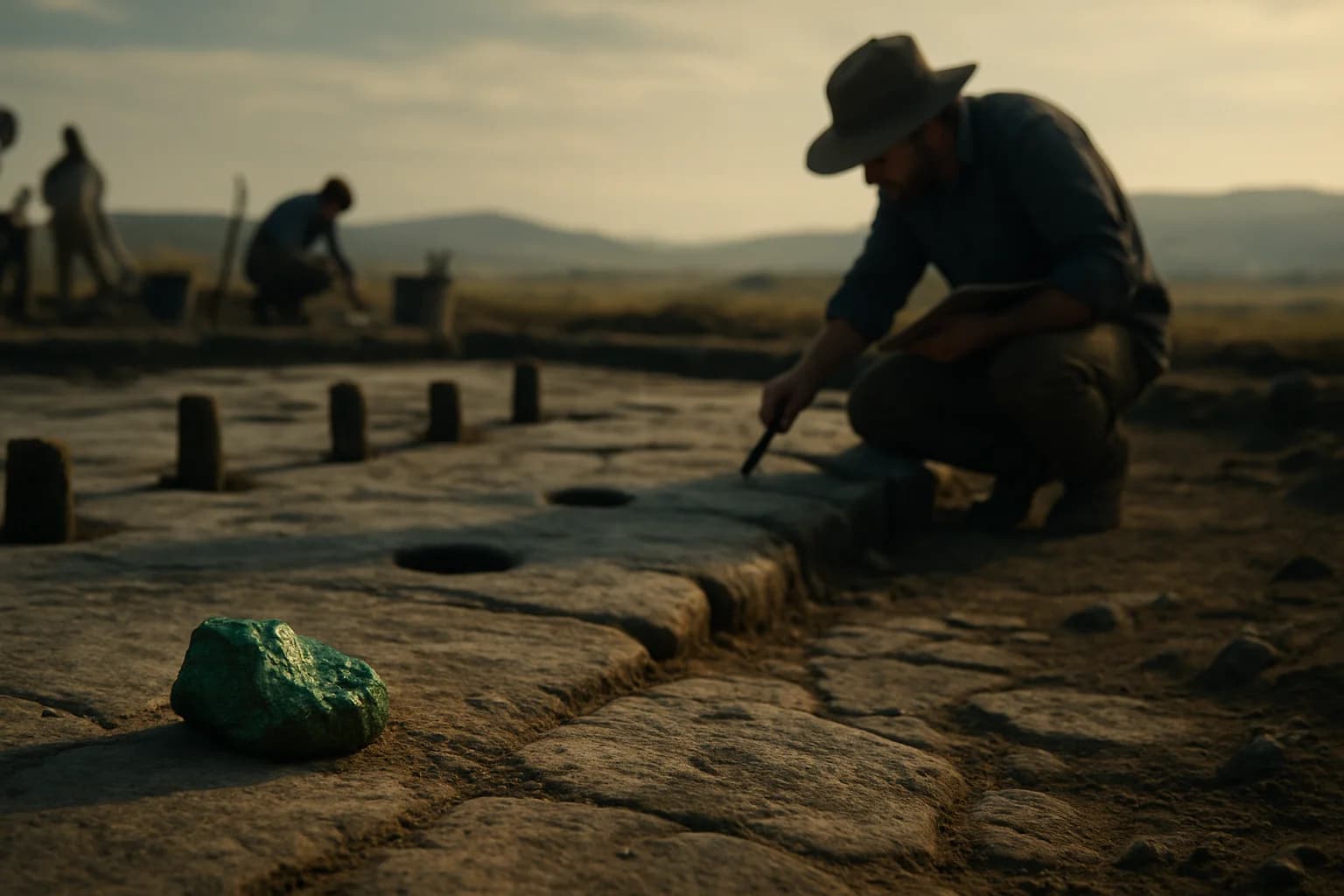
Karahantepe belongs to the Taş Tepeler cluster of early Neolithic sites near Şanlıurfa, long known for T‑shaped pillars, carved reliefs and anthropomorphic sculpture. The human‑on‑leopard statue was recovered intact within an architectural context—a platform or paved surface—allowing archaeologists to record its stratigraphic relationships. Official communications report that the piece underwent initial conservation on site.
Form, material and technical notes
Photographs released by the excavation and reported in reputable outlets show a worked limestone figure with a carefully modelled human seated on the animal’s back. The object measures about 70 cm in height. Surface cleaning reveals tool marks and a patinated surface; conservators documented microfractures. These preliminary technical observations will be followed by more detailed petrographic and residue analyses.
Comparative examples in the region
Southeastern Anatolia supplies multiple precedents: life‑size anthropomorphic sculptures (e.g., Urfa Man), carved reliefs of animals and hybrid scenes, and several finds at Karahantepe and nearby sites. Yet the particular motif of a human atop a leopard—rendered in the round—is exceptional. Comparanda include carved scenes of humans and predators at neighbouring sites, but the three‑dimensional mounting motif appears to be a novel contribution to the corpus.
Interpretive possibilities
Scholars have proposed several interpretive lines: the image may express social status or mastery over dangerous animals, mythic or cosmological narratives, shamanic performance, or symbolic roles in ritual drama. Each hypothesis depends heavily on context: associated deposits, offerings, wear patterns, and nearby iconography will shape the final interpretation. Current public statements avoid definitive claims pending further analysis.
Evidence limits and required data
At present, the primary evidence consists of excavation reports, official photos and press statements. Radiometric dating (e.g., radiocarbon from secure contexts), petrographic study and micro‑residue/pigment testing have not yet been published. Thus the often‑quoted '11,000 years' baseline reflects the excavation team's chronology for Karahantepe but needs publication and peer review for full confirmation.
What next for researchers?
Researchers will publish conservation reports, stratigraphic diagrams and—critically—dating evidence in the months to come. Comparative iconographic studies and material analyses (stone sourcing, toolmark analysis, pigment traces) are the obvious next steps. Expect formal publications within 6–18 months as analyses and peer review proceed.
Broader implications
Beyond novelty, the statue points to greater diversity in Neolithic symbolic practice than sometimes acknowledged: three‑dimensional, narrative‑capable stone sculpture was part of the repertoire in early village communities. For global prehistory, such finds highlight how early sedentary societies invested labor and skill in material expressions of identity, power and cosmology.
Site management and public access
The Turkish authorities have emphasised conservation and documentation. Any future public display should weigh the fragility of early Neolithic limestone works, the need for controlled environments, and the ethical responsibilities toward local communities and scientific stakeholders.
Conclusion
The Karahantepe human‑on‑leopard statue is a provocative, well‑documented addition to early Neolithic art in southeastern Anatolia. It extends known iconographic repertoires and opens fresh avenues for interpreting social performance, myth and the role of sculptural practice in the dawn of settled life. As lab results and scholarly publications arrive, the statue will help refine our picture of how early communities encoded meaning in stone.
Frequently asked questions
How reliable is the '11,000 years' date?
The '11,000 years' age is the field team's current assessment for Karahantepe contexts; formal radiometric and publication validation are still pending, so the age should be treated as provisional until peer‑reviewed data appear.
Does this mean people were riding leopards?
No direct evidence indicates actual riding. The sculpture is symbolic and may represent mythic, ritual or status themes rather than literal behavior.
Will the statue go on public display?
Authorities report ongoing conservation. Decisions about exhibition will depend on conservation outcomes and site‑management planning; no permanent display date has been announced.
What scientific analyses are needed next?
Key analyses include radiometric dating of associated deposits, petrographic sourcing of the limestone, toolmark and micromorphological study, pigment/residue testing and contextual publication of stratigraphy and associated finds.
Sources and further reading
- 11,000-Year-Old Statue of Human Riding Leopard Discovered at Karahantepe in Türkiye — Republic of Türkiye Directorate of Communications (press compilation / Xinhua), 2026-08-26
- Unusual Sculpture Uncovered in Southeastern Turkey — Archaeology Magazine (news item), 2026-08-27
- 'Unlike anything seen before': Archaeologists unearth a unique, 11,000-year-old statue of a person riding a leopard — Live Science, 2026-08-26
- 11,000‑Year‑Old Statue Found at Karahantepe Shows a Human Sitting on a Leopard — Anatolian Archaeology, 2026-08-25
- Karahantepe in Türkiye’s Sanliurfa sheds light on human history with structures dating back around 12,000 years (infographic) — Anadolu Agency (AA), 2026-08-26
Source trail
Selected references and research starting points
- Republic of Türkiye Directorate of Communications (press compilation / Xinhua), 11,000-Year-Old Statue of Human Riding Leopard Discovered at Karahantepe in Türkiye, 2026-08-26, Open source
- Archaeology Magazine (news item), Unusual Sculpture Uncovered in Southeastern Turkey, 2026-08-27, Open source
- Live Science, 'Unlike anything seen before': Archaeologists unearth a unique, 11,000-year-old statue of a person riding a leopard, 2026-08-26, Open source
- Anatolian Archaeology, 11,000‑Year‑Old Statue Found at Karahantepe Shows a Human Sitting on a Leopard, 2026-08-25, Open source
- Anadolu Agency (AA), Karahantepe in Türkiye’s Sanliurfa sheds light on human history with structures dating back around 12,000 years (infographic), 2026-08-26, Open source
The list is a research trail. Specific claims should be checked against the cited edition, object record or publication.
How this page is handled: Evidence, interpretation and modern speculation are separated. Material corrections are reflected in the article date.