Istanbul’s Tünel: An Underground Memory from 1875 to Today
A documented account of the Karaköy–Beyoğlu Tünel (1875): engineer Henry Gavand, 19th‑century transport technology, urban change and continuity with modern tunnel projects.
1. What is the Tünel?
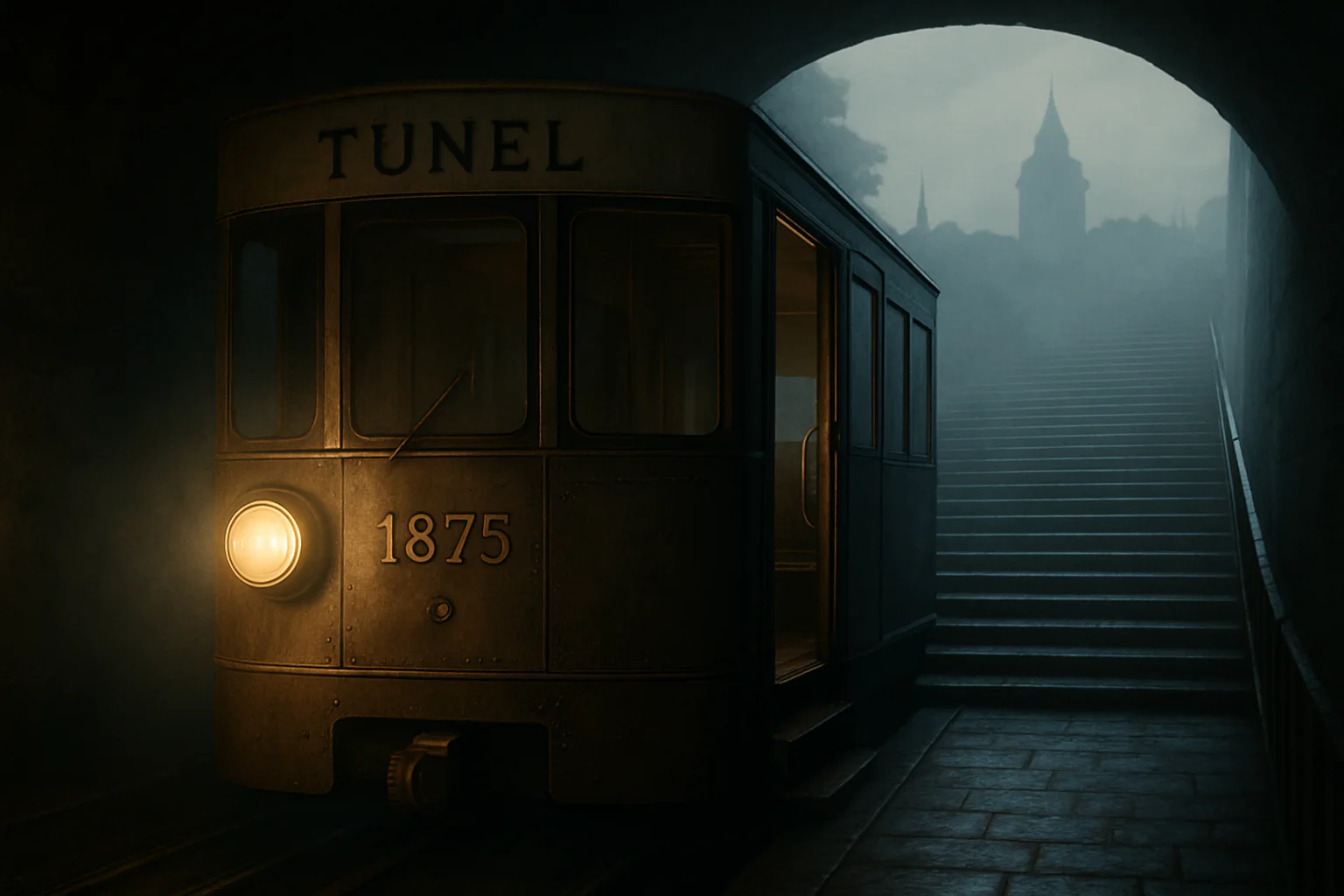
The Tünel is a short underground funicular connecting Karaköy (Galata) and Beyoğlu (Pera) in Istanbul. Opened on 17 January 1875, it is one of the earliest urban underground transit lines still in existence. Official sources from IETT and the Istanbul governor’s office record the line’s construction and opening dates, and document its role in the city’s transport history.
2. From concept to construction: Henry Gavand
The project traces back to French engineer Henry (Eugène‑Henri) Gavand, who proposed a lift-type railway to overcome the steep grade between Galata and Pera. Gavand secured an Ottoman concession in 1869; construction began in 1871 and the tunnel was structurally completed in December 1874, with operations commencing in January 1875. This timeline illustrates Ottoman engagement with foreign engineers and capital for urban modernization.
3. 19th‑century machines: steam engines and the first carriages
Initially the Tünel used steam power: horizontal double‑cylinder engines driving carriage movement via belt systems. Surviving rolling stock and machinery—documented in museum collections like the Rahmi M. Koç Museum—provide physical evidence of the line’s early mechanical arrangements and industrial provenance, often French-made.
4. Social and commercial effects
Beyond engineering, the Tünel reshaped urban flows. By linking Beyoğlu’s entertainment and commercial quarter with the dockside and markets around Galata, the funicular altered patterns of daily life, broadening customer bases for shops and cafés and reconfiguring pedestrian movements across steep topography.
5. Modernization, electrification and ownership changes
In the early 20th century the line underwent electrification and changes in ownership reflecting broader shifts from late Ottoman arrangements toward Republican municipal control. Official IETT histories and municipal cultural pages note the transitions, restorations and continuing operation under city authorities.
6. Engineering profile of the line
At roughly 573 metres, the Tünel’s two-station profile and steep alignment demanded adapted tunnel sections, station layout and machinery rooms. Technical reports from Istanbul Technical University and municipal documents detail the tunnel’s cross-sections, gradient and mechanical systems—data that matter for preservation and any upgrade works.
7. Museums, conservation and material culture
Original carriages and mechanical components are preserved in museum collections, where they are interpreted as industrial heritage. Such artefacts link public memory to material objects and support arguments for careful conservation of transport heritage amid urban change.
8. Contemporary 'tunnel' debates and continuity
Current media interest in "tünel" often centres on new long mountain tunnels and large infrastructure projects in Turkey. While these modern tunnels differ technically and spatially from the 19th‑century Tünel, they share an enduring objective: overcoming landscape constraints to connect places and economies. Historical cases like the Tünel let us assess how past technical choices, financing models and social impacts inform present debates.
9. Why this history matters
Studying the Tünel clarifies how technological transfer, foreign engineers, and municipal policies shaped modern Istanbul. When contemporary projects rekindle public interest in tunnels, historical awareness helps evaluate trade‑offs between rapid infrastructure delivery and the preservation of urban heritage.
10. Where to read and see more
The main documentary sources include IETT’s historical pages and activity reports, municipal cultural narratives, museum collection records (Rahmi M. Koç Museum) and technical studies from Istanbul Technical University. Those interested in the subject can consult these institutional sources for primary documentation and further bibliographic leads.
Frequently asked questions
Is the Tünel truly the world's second-oldest underground urban railway?
The Tünel opened on 17 January 1875 and is commonly cited—by city and transport authorities—as one of the earliest urban underground lines following the London Underground (1863). Official IETT and municipal sources use this chronology.
What role did foreign engineers play in the Tünel’s construction?
Henry Gavand, a French engineer, designed the project and obtained the concession in 1869. The project relied on foreign engineering expertise and equipment, a common pattern in Ottoman urban modernization.
Are original Tünel vehicles on display?
Yes. Early carriages and machinery related to the Tünel are preserved in Turkish museum collections, notably the Rahmi M. Koç Museum, which documents the physical artifacts.
How does the 1875 Tünel relate to modern tunnel projects in Turkey?
While modern long tunnels (e.g., mountain passages) use different technologies, they belong to the same long-term project of overcoming geography to connect places. The Tünel offers a historical perspective on outcomes and social effects of such engineering undertakings.
Sources and further reading
- Tünel — İETT (İstanbul Elektrik Tramvay ve Tünel İşletmeleri), unknown
- Tünel — İstanbul Valiliği - İstanbul’da Tarihte Yolculuk, unknown
- Tünel — Brief History (English) — IETT, unknown
- Tünel Vagonu ve Makinesi (koleksiyon kaydı) — Rahmi M. Koç Müzesi, unknown
- Tünel: Technical and historical summary (paper, ITU Transport) — Istanbul Technical University - Transport, 2014
- Tünel (İBB Kültür Sanat) — İstanbul Büyükşehir Belediyesi Kültür Sanat, unknown
Keep exploring: Use the topic hub for closely related articles or browse the full archive instead of starting a new search.