A 9,000-Year-Old Mining Workshop at Çayönü Tepesi: Neolithic Production, Malachite and the Ergani Mines
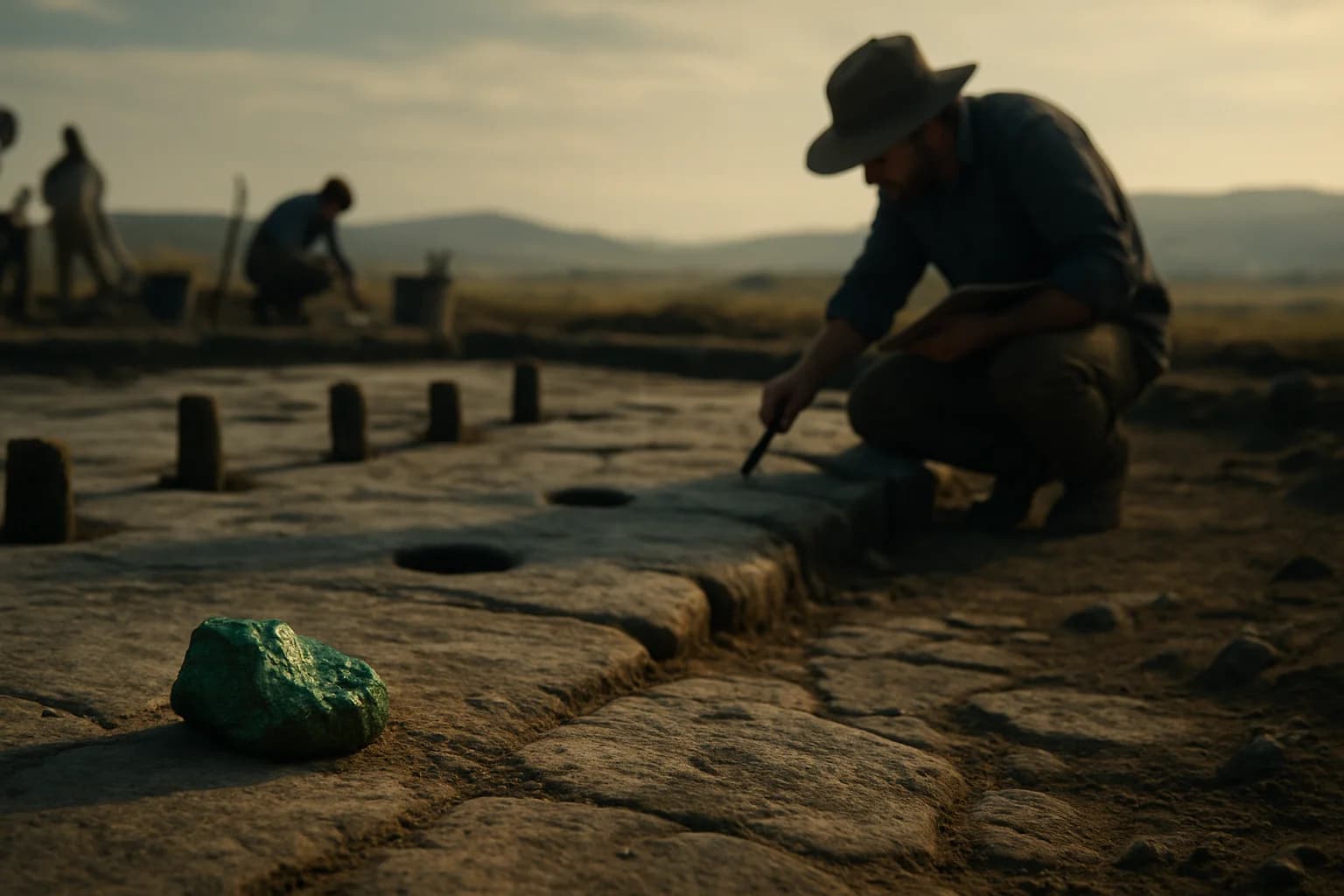
Excavations at Çayönü Tepesi (Ergani, Diyarbakır) revealed a ~5 m² workshop dated to c. 6900–6800 BCE with malachite and native copper traces, shedding light on Neolithic production networks.
1. How the discovery was announced and dated
Official statements from Turkey's Culture and Tourism Ministry, reported by Anadolu Agency and the Directorate of Communications in early September 2026, describe the uncovering of a defined workshop area within Çayönü's stratigraphy. The ministry gives a date range of 6900–6800 BCE based on contextual stratigraphy and comparative dating; full radiocarbon and laboratory reports have not yet been publicly released. Anatolian archaeology outlets published initial assessments noting malachite beads and copper fragments among the finds.
2. Çayönü Tepesi in archaeological perspective
Çayönü has long been central to discussions of the Neolithic in Anatolia: its occupation sequences, architecture, and early craft evidence have made it a touchstone for debates about the origins of sedentism, complex architecture and early material technologies. Earlier scholarship already recorded malachite and native copper occurrences at Çayönü; what appears novel here is the spatial concentration and contextual integrity suggesting a dedicated production area.
3. What do archaeologists mean by 'mining' or a 'workshop' in this period?
Terminology matters: in prehistoric contexts 'mining' can range from opportunistic surface collection to structured extraction or processing. The Çayönü announcement uses 'workshop' to indicate more than casual collection — the co-occurrence of raw chunks, partially worked pieces and manufacturing debris implies on-site processing steps (grinding, drilling, shaping) rather than mere consumption of finished items.
4. Malachite, native copper and Ergani as a source
Geographically, Çayönü sits within reach of the Ergani maden complex — a cluster of copper and copper-oxide (malachite) occurrences known from both modern geology and past archaeological discussions. Previous isotopic and typological studies have proposed Ergani as a plausible source for Çayönü's early metal and pigment materials, but definitive provenance requires elemental/isotopic analyses which are still awaited for the 2026 assemblage.
5. The material assemblage: what was recovered?
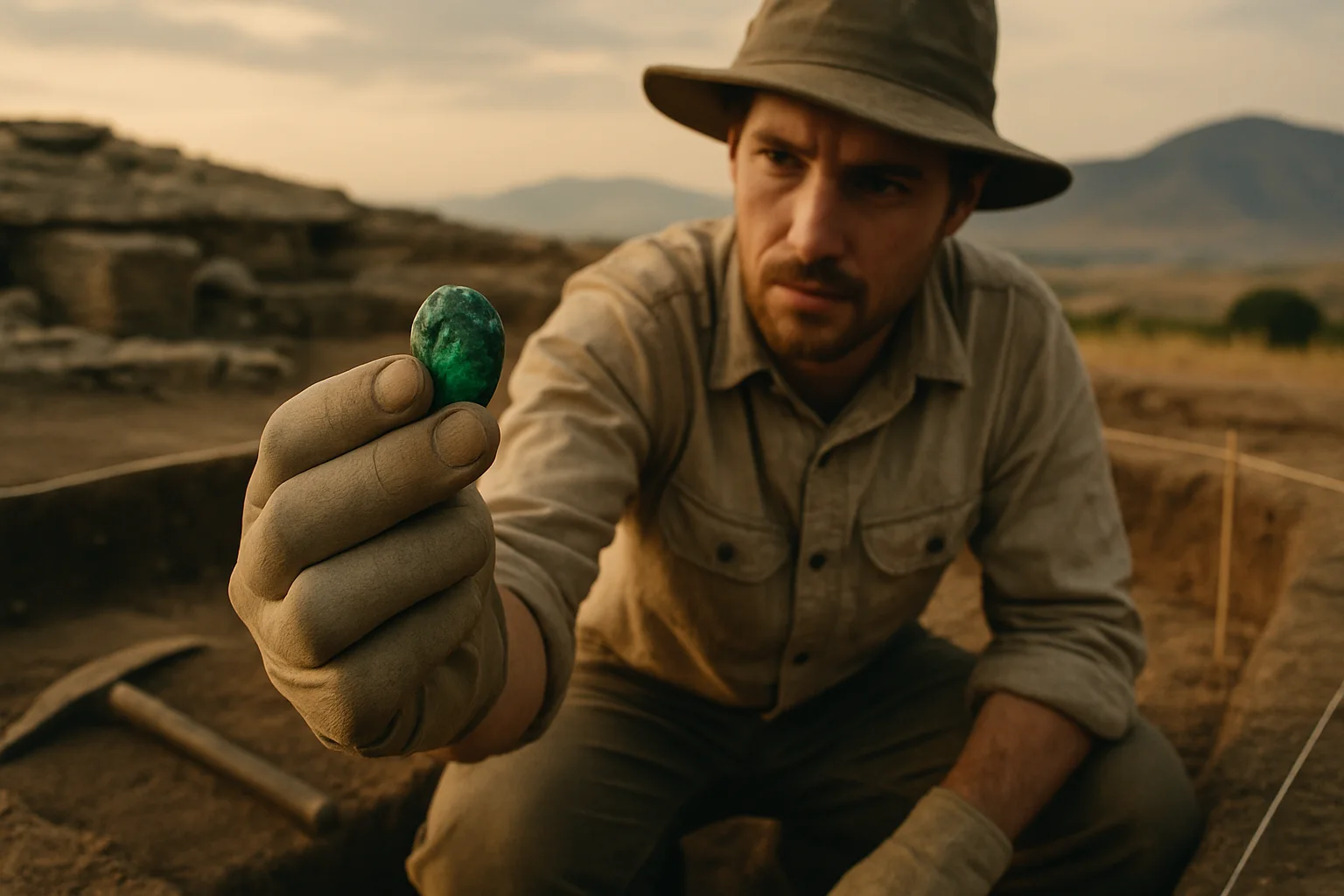
Press reports list malachite lumps, perforated malachite beads, small native copper fragments and production waste. Such an assemblage is consistent with both ornament manufacture and elementary metalworking techniques (cold hammering, drilling). The crucial next steps are metallographic cross-sections and compositional studies to determine whether the copper is native (pure elemental copper) or the product of smelting and whether malachite served purely as a pigment/ornament or as ore.
6. Why the discovery matters for debates on early metallurgy
Recent research has increasingly argued for episodic, localized use of native metals in the 9th millennium BCE across Anatolia. A well-contextualized workshop provides stronger evidence for repeated, organized production rather than isolated find-spots. If corroborated by lab analyses, the Çayönü workshop could push back understandings of technological specialization and long-distance resource networks in early farming communities.
7. Analytical methods and what to expect
To move beyond headlines, archaeologists will rely on radiocarbon dating, microstratigraphic sampling, XRF/ICP-MS for elemental composition, lead/copper isotope sourcing, and metallography. These methods will test chronological claims, technological inferences and source hypotheses. Peer-reviewed publication of these datasets is the necessary next milestone.
8. Broader implications: economy, craft specialisation and exchange
Should further analyses support organized production, scholars will revisit questions of craft specialization in sedentary Neolithic villages: who controlled raw-material flows, whether specialist artisans emerged, and how such products circulated regionally. The Çayönü workshop could become a case study for early 'industrial' spaces in prehistory — small-scale, but socially meaningful production zones embedded in village life.
9. Conservation and public archaeology
The ministry’s statements indicate that finds are being conserved and documented. Transparent publication and collaboration with international specialists will be important to avoid premature claims and to situate Çayönü within comparative frameworks across the Near East.
10. Conclusion: exciting data, careful science needed
The 2026 Çayönü Tepesi discovery is a compelling addition to Anatolia’s deep prehistory. Its potential to clarify early mineral use and production depends on forthcoming laboratory work and scholarly debate. For now, the find renews attention to how Neolithic communities organized raw-material economies and the longue durée of Anatolia’s metallurgical past.
Frequently asked questions
Where is Çayönü Tepesi and why is it archaeologically important?
Çayönü Tepesi is a Neolithic tell near Ergani in Diyarbakır province. Its long stratigraphic sequence records early farming, architecture and craft activities central to Anatolian prehistory.
Does 'workshop' mean they were smelting copper here?
Not necessarily. Early contexts often show use of native copper (mechanically worked) and malachite as ore or pigment. Smelting evidence would require clear metallurgical residues and slag, which have not been publicly reported yet.
Can we be sure the raw materials came from Ergani mines?
Not yet. Ergani is a plausible nearby source historically discussed in the literature, but definitive provenance requires isotopic and elemental analyses that are pending.
When will the scientific analyses be published?
The ministry statement and initial reports were released in early September 2026; laboratory studies and peer-reviewed publications typically take months to years. Expect preliminary analytical results in specialist journals or conference presentations within a year.
Sources and further reading
- Çayönü Tepesi'nde M.Ö. 6900-6800 yıllarına tarihlenen 5 metrekarelik madencilik işliği bulundu — Anadolu Agency (AA), 2026-09-01
- 8,800-year-old mining workshop uncovered at Çayönü Tepesi (press release) — Republic of Türkiye Directorate of Communications, 2026-09-02
- 9,000-Year-Old Malachite and Copper Workshop Discovered at Çayönü Tepesi — Anatolian Archaeology, 2026-09-01
- The Archaeological Background — discussion of Çayönü metallurgical finds (scholarly chapter) — Brill / New York University / Oriental Institute citations (historic scholarship), 199x
- Ergani (Kızıltepe/Ergani Maden) as regional source for native copper and malachite — archaeological review — Oriental Institute / University of Chicago research overview, 201x
Keep exploring: Use the topic hub for closely related articles or browse the full archive instead of starting a new search.