Eid al‑Fitr (Ramazan Bayramı): From Ottoman Pageantry to Contemporary Public Holiday
A historical look at Eid al‑Fitr in Turkey: Islamic origins, Ottoman court ceremonies and popular customs, and how the Republic codified the holiday and social practices such as fitr.
1. What Eid al‑Fitr commemorates
Eid al‑Fitr—known in Turkish as Ramazan Bayramı or fıtr/iftar bayramı—marks the end of the month of Ramadan. Classical Islamic texts and hadith collections record communal prayer (the Eid prayer), giving of the fıtr alms, and family visits as central practices. Contemporary official religious guidance (e.g., from Turkey’s Diyanet) reiterates these obligations and their social purposes: the fıtr alms aim to ensure those with fewer means can share the festival’s joy.
2. Etymology and place in Turkish cultural history
Scholarly reference works (TDV İslâm Ansiklopedisi) note that the word "bayram" has Persian roots and that the Muslimization of Turkic societies integrated two major Islamic festivals—Eid al‑Fitr and Eid al‑Adha—into local cultural routines. Over centuries the festival acquired both religious and civic significance: public hospitality, gift-giving and communal entertainment accompanied religious observance.
3. Ottoman court ritual: muayede and the bayram alayı
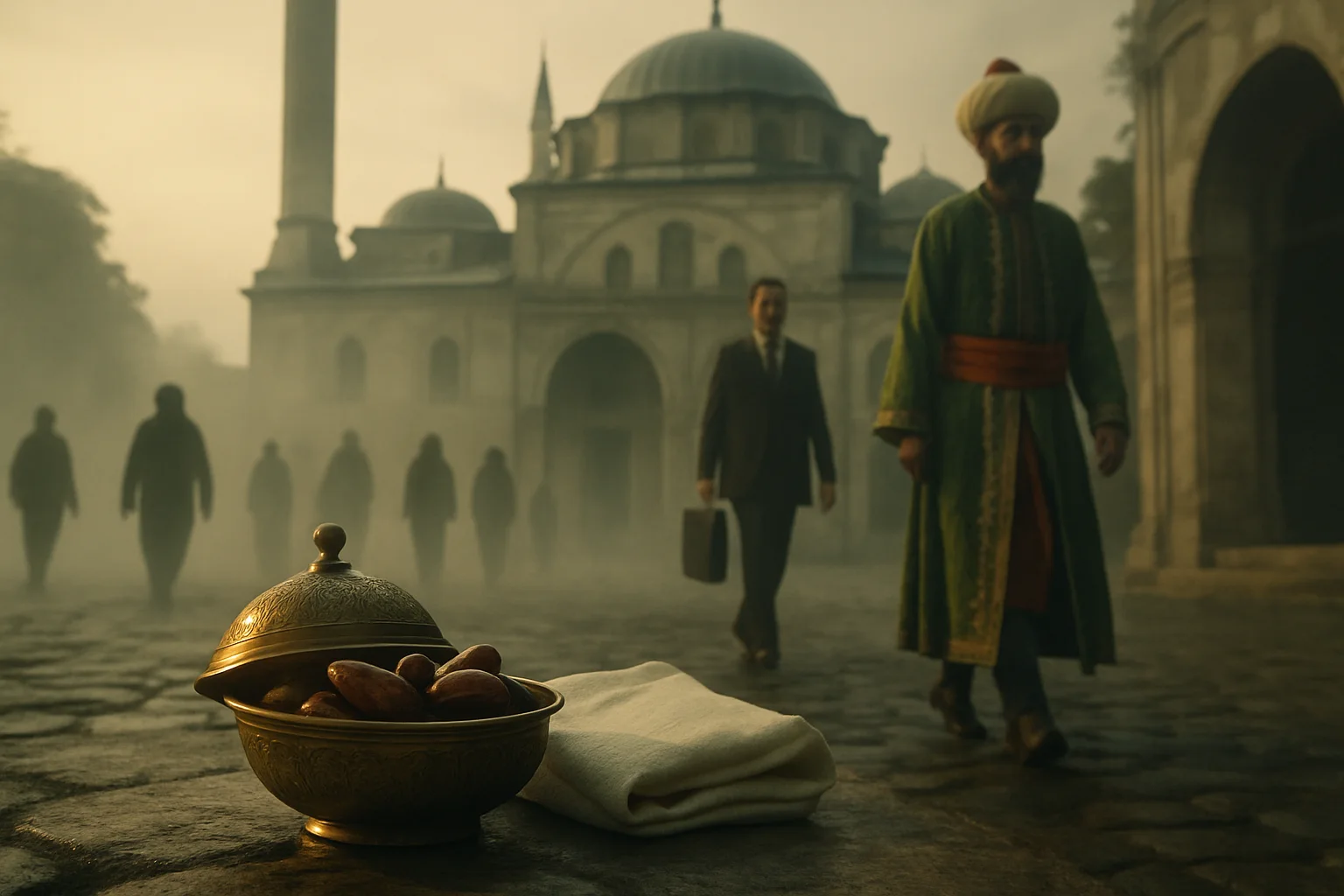
In the Ottoman court the holiday followed a highly choreographed sequence. The muayede—often translated as the "bayram alayı"—involved the sultan’s departure from the palace for Eid prayer and a ceremonial return. An arife divan (the pre‑Eid court session), the formal reception of tebriks (congratulations), and the procession itself displayed state hierarchy and legitimized authority. University theses and Ottoman archival studies document the roles, timing and ceremonial garments that made these events a stage of power as well as devotion.
4. Popular festivities: food, performances and mutual aid
Alongside court ritual, ordinary people celebrated with sweets (baklava and similar confections), public performances such as storytellers and wrestlers, and neighborhood visits. These customs—recorded in travelogues and local chronicles—functioned as social glue, binding neighborhoods through exchange, hospitality and shared festivity.
5. Nineteenth‑century transformations: reform, cost and regulation
From the mid‑19th century, Ottoman administrative change reshaped holiday practice. Costly public displays were sometimes curtailed; administrative regulations adjusted who paid visits and which ceremonies were state‑funded. The growth of a salaried bureaucracy also shifted some ritualized expectations away from private patrons and toward administrative practice.
6. The Republic and legal codification of holidays
With the founding of the Republic of Turkey, the state assumed responsibility for regulating national and religious holidays. Laws and decrees in the early republican era and the later codification under Law No. 2429 ("National Holidays and General Holidays"), now in force with updates, define the legal duration of religious holidays and the statutory arrangements for workplace leave. Today the law describes Eid al‑Fitr as a 3.5‑day holiday beginning at 13:00 on the day before Eid (the arife) and continuing for full days thereafter; the exact Gregorian dates are announced by Diyanet each year.
7. Fitr alms and the institutionalization of charity
The fıtr (fitr) tradition historically served as a communal safety net: by providing a day’s food to those in need, the community collectively insured that the poor would also participate in the festival’s joy. Modern Turkey has institutionalized aspects of this practice through religious foundations, charities, and Diyanet‑led guidance which specify recommended amounts, collection channels and distribution mechanisms.
8. The changing spaces of celebration
Whereas Ottoman festivals could center on palatial spaces and local musallâs, modern urbanization shifted much of the public life to city squares, municipal venues and media platforms. In recent years, digital communications and video calling have also introduced remote forms of "bayramlaşma" (festival greetings), though in‑person communal prayer and family visits remain core to practice.
9. Contemporary debates: calendars, administrative leave and "bridge" holidays
Public interest in the dates of Eid al‑Fitr (e.g., "Ramazan Bayramı 2027" searches) often reflects practical concerns—school schedules, travel, and whether the holiday will be extended administratively. While Diyanet provides the religious date, the government can and does decide on administrative extensions ("köprü tatil"). This layered decision‑making explains why people monitor both religious and governmental announcements.
10. Conclusion: a festival that records political and social history
Eid al‑Fitr in Turkey is more than a movable holiday: it is a lens through which one can read centuries of religious practice, court ritual, social welfare and state formation. From muayede processions that asserted dynastic power to modern legal frameworks that organize public life, the festival records an ongoing negotiation between devotion, display, and public order.
Practical note: For exact Gregorian dates and any administrative decisions affecting the 2027 Eid period, consult the Diyanet calendar and the text of Law No. 2429 or official gazette announcements; Diyanet’s yearly calendar and statements are the primary source for the religious determinations.
Frequently asked questions
How many days is Eid al‑Fitr legally in Turkey?
Under current Turkish law (No. 2429) Eid al‑Fitr is treated as starting at 13:00 on the arife (day before) and continuing for a total of 3.5 days. Exact Gregorian dates are set annually by Diyanet.
Who determines the exact date of Eid each year?
The Diyanet İşleri Başkanlığı calculates and announces the dates based on the Islamic calendar and/or sighting principles; governmental administrative extensions are announced by the Presidency when applicable.
What was the Ottoman "bayram alayı"?
The bayram alayı or muayede was the sultan’s formal procession for Eid prayers—an organized court ceremony that displayed rank, ritual and public order in Ottoman court culture.
Is giving fitr still recommended and how is it organized?
Yes. Fitr (fitr alms) remains a recommended practice. Today many give it via Diyanet‑approved collection channels, charitable foundations, or directly to those in need; Diyanet issues guidance on recommended amounts and timing each year.
Sources and further reading
- Ramazan Bayramı — Diyanet İşleri Başkanlığı (resmi yayınlar ve hutbeler) — Diyanet İşleri Başkanlığı, various (official annual publications; latest 2026)
- Bayram — Türkiye Diyanet Vakfı İslâm Ansiklopedisi (TDV İA) — TDV İslâm Ansiklopedisi, accessed 04.09.2026
- Ulusal Bayram ve Genel Tatiller Hakkında Kanun (No. 2429) — Mevzuat (resmî hüküm) — Mevzuat / Türkiye Cumhuriyeti Resmî Mevzuat, 19 March 1981 (updated)
- On Sekizinci Yüzyıl Osmanlı Sarayı’nda Bayram Törenleri — Zeynep Tarım (tez/makale kaynakları) — İstanbul Üniversitesi / tez ve makale derlemeleri, academic thesis (various archival dates cited)
- Osmanlı'da Bayram Alayı — TDV İslâm Ansiklopedisi entry 'Bayram Alayı' — TDV İslâm Ansiklopedisi, entry (consulted 08.09.2026)
- Osmanlı’da ve Cumhuriyet’te Bayram Gelenekleri — çeşitli üniversite makaleleri (derleme) — DergiPark / Osmanlı-Medeniyeti ve sosyal tarih yayınları, Journal of Ottoman Civilization Studies, 2021 (example)
Keep exploring: Use the topic hub for closely related articles or browse the full archive instead of starting a new search.