Istanbul’s Electric Heritage: BEDAŞ, Silahtarağa and the City's Long Electrification
Framed by current BEDAŞ outages, this piece traces Istanbul’s electrification from Silahtarağa (Santral İstanbul) through Ottoman and Republican institutional change to today’s distribution challenges.
Introduction: A modern outage, a long history
On and around 9–10 September 2026, planned outage announcements and fault reports published by BEDAŞ drew public attention. These events are a timely entry point to ask where the city’s electricity comes from, how its distribution network formed over time, and how contemporary companies inherit technical and institutional legacies. The electrification of Istanbul is central to narratives of urban modernisation.
Silahtarağa: the city’s first major thermal plant
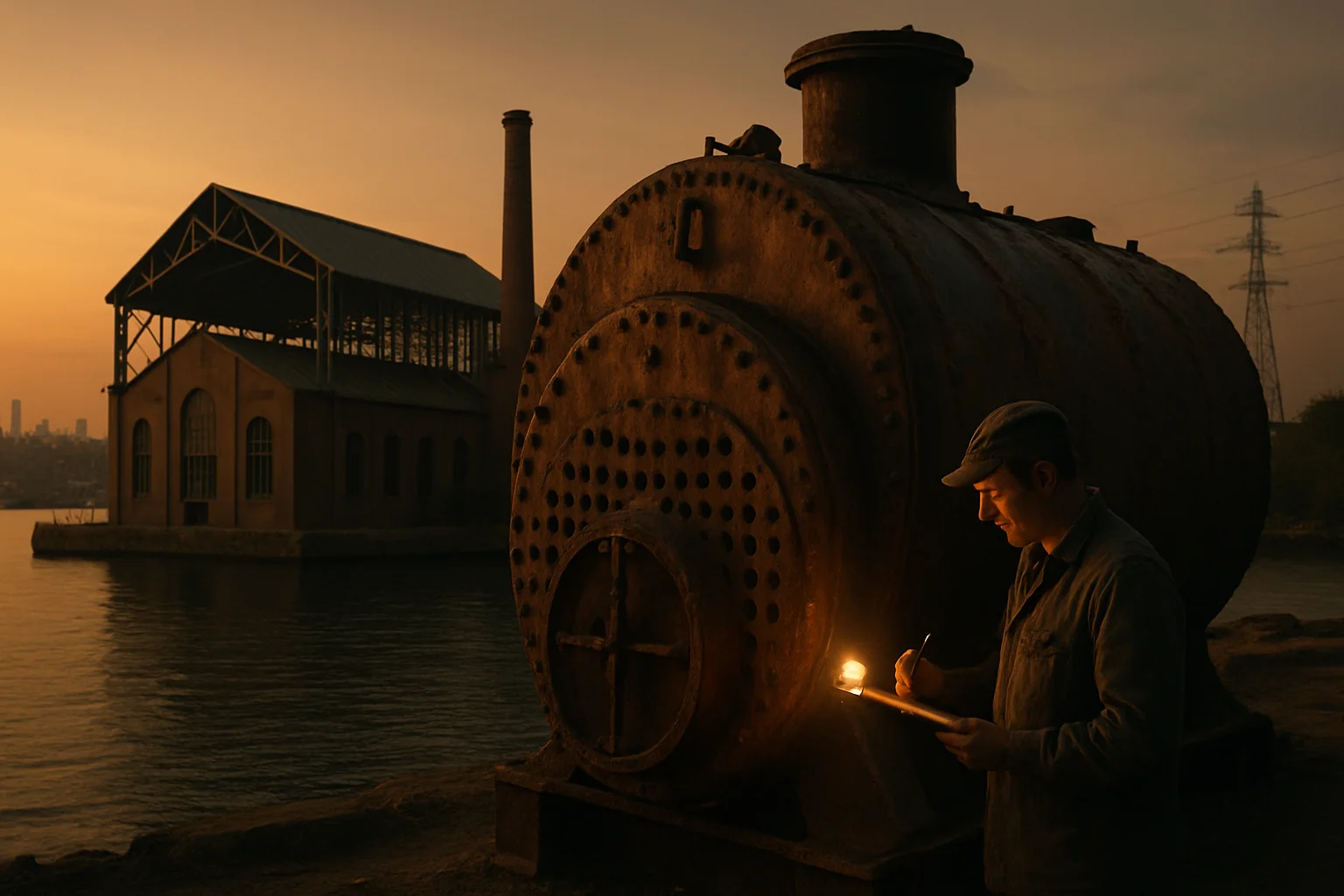
The Silahtarağa complex on the Golden Horn, built in the 1913–1914 period by firms including Ganz, served as Istanbul’s principal coal-fired thermal plant from 1914 until production ceased in 1983. The plant’s boilers, turbines and heavy-engine halls powered street lighting and industry. In the 2000s the facility was transformed into Santral İstanbul — hosting an Energy Museum and university campus — becoming a visible case of industrial heritage reuse. (Sources: Santral Istanbul studies; TAY heritage reports; academic analyses.)
From Ottoman to Republican governance: spread, nationalisation, and reform
Electricity entered Ottoman domains in the late 19th century, first used for naval, tramway and selective lighting projects. Between 1910 and the 1930s private concessions, foreign companies, and later state interventions produced a mixed landscape of providers. Silahtarağa was nationalised in the late 1930s and brought under municipal or state authority—moves that echoed broader Republican electrification ambitions. These institutional changes determined who built networks, who financed roll-out, and how distribution rights were regulated. (Sources: DergiPark and other scholarly works.)
Distribution models: concessions, municipal services, privatisation
Over the 20th century, the organisation of generation and distribution shifted between private concessions, municipal operators, state-owned entities and, in recent decades, privatisation and concessions to consortiums. BEDAŞ is a contemporary outcome of these long-term processes: its geographic remit and tenure derive from late-20th and early-21st-century restructuring and concession agreements. Official KAP documents and tapu annotations record leases and encumbrances tied to distribution facilities.
Infrastructure and urban form: substations, lines and planning
Today's planned outages are frequently necessitated by substation upgrades, cable replacement, or system improvements. Such maintenance needs are rooted in the city’s rapid growth and changing land use. Even when generating plants like Silahtarağa close, their spatial footprints—transformer yards, worker housing, service roads—remain part of the city’s physical memory and constrain where and how new networks are delivered.
Santral İstanbul as a case of industrial heritage reuse
The conversion of Silahtarağa into Santral İstanbul demonstrates a model where an industrial complex is conserved and reprogrammed for cultural, educational and museum uses. The project involved architectural reinforcement, preservation of large-scale machines as exhibits, and the creation of public spaces—illustrating how energy infrastructure can be reinterpreted as cultural heritage.
Outages in historical perspective: maintenance, legacy, and governance
Citizens frustrated by outages should recognise that maintenance-driven shutdowns are part of keeping a sprawling network reliable. Yet debates about who pays, who invests, and how public oversight operates are shaped by the legacy of concession and privatisation waves. The historical record shows persistent tensions between private operators’ commercial logics and municipal/state responsibilities for equitable service.
Building a bridge from past to present
BEDAŞ’s notices are ephemeral from a news standpoint but embedded within a century-long history of how Istanbul generates, moves, and governs electrical power. Urban planners, conservationists and engineers can use this shared history to design investments that improve reliability while protecting industrial heritage sites and increasing transparency for users.
Conclusion: Power, memory and public expectation
Electricity’s arrival in Istanbul remade both public space and industrial organisation. Machines at Silahtarağa still speak to that transformation; today’s distribution announcements by BEDAŞ are the latest chapter. Understanding the technical and institutional past helps frame policy choices: which networks to prioritise, how to balance private operation with public accountability, and how to treat infrastructure as both service and heritage.
Frequently asked questions
What is BEDAŞ and where does it operate?
BEDAŞ (Boğaziçi Elektrik Dağıtım A.Ş.) is the distribution company responsible for supplying electricity to specified districts of Istanbul. Its concession history and property records are available in KAP filings.
When did Silahtarağa (Santral İstanbul) operate as a power plant?
Silahtarağa began producing electricity in the 1913–1914 period and continued until production ceased in 1983; the site was later restored and reused as Santral İstanbul.
Are current outages caused by old infrastructure?
Often outages result from maintenance or upgrades on ageing components, but each incident’s cause should be verified against the distribution company’s technical bulletins and field reports.
Why is Santral İstanbul significant?
Santral İstanbul is a prominent example of converting an industrial energy site into museum, cultural and educational uses—showing how energy heritage can be preserved while serving new public functions.
Sources and further reading
- OSMANLI DEVLETİ’NDE ELEKTRİĞİN YAYILMASI — Çağdaş Türkiye Tarihi Araştırmaları Dergisi (DergiPark), 2018-06-01
- Silahtarağa Elektrik Santrali / Santral İstanbul - akademik ve koruma çalışmaları — TAY (Toplu Arkeolojik Yapı Envanteri ve Yayımları) / araştırma arşivleri, 2013-10-01
- Boğaziçi Elektrik Dağıtım A.Ş. (BEDAŞ) - KAP dosyası ve tapu/şerh kayıtları — Kamuyu Aydınlatma Platformu (KAP) ve şirket belgeleri, 2025-01-01
- Santral İstanbul ve Silahtarağa tarihi: endüstri mirası incelemeleri — Araştırma/Görsel-mimari incelemeler (Karabük Üniversitesi, ResearchGate vb.), 2023-05-01
Keep exploring: Use the topic hub for closely related articles or browse the full archive instead of starting a new search.