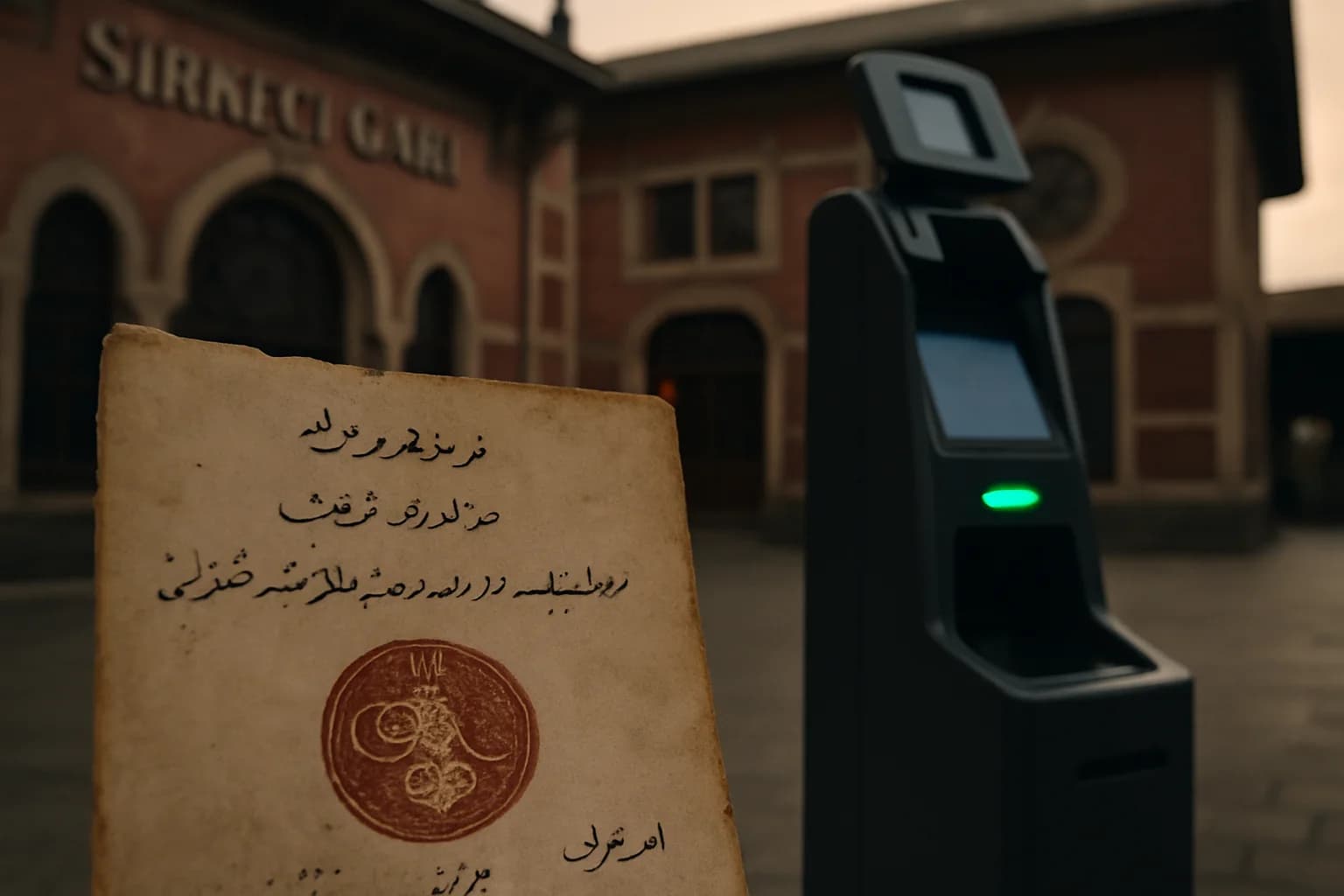

From Lydian Coins to Republic Gold: A Long History of Gold in Anatolia and Turkey
As people in Türkiye watch the live gold price, few realise they are part of a 2,500‑year story that runs from Lydian coins to Ottoman sultani pieces and modern Republic gold.
Beyond Today’s Gram Price: Why Has Gold Been Trusted for So Long?
In today’s news tickers, gold appears mostly as a moving number: the price of a gram, a quarter coin, an ounce. Yet behind that number lies a long history in which gold became more than a pretty metal. Scarcity, durability, ease of division and resistance to corrosion turned it into a favoured medium of exchange and store of value in many societies.
Anatolia sits at the heart of this story. The ancient kingdom of Lydia in western Anatolia is central to both gold refining and the history of coinage. Since 1958, the joint Harvard–Cornell excavations at Sardis (near modern Sart in Türkiye) have uncovered a Lydian gold refinery and early coins, firmly linking the site to some of the earliest known monetary innovations.([archaeology.cornell.edu](https://archaeology.cornell.edu/sardis))
Lydians and the First Coins: A Gold Workshop at Sardis
The Greek historian Herodotus singled out the Lydians as the first people to use coined money. Modern archaeology cannot confirm every detail of his account, but it does show that electrum coins produced in western Anatolia in the 7th–6th centuries BCE were a turning point in monetary history.
Electrum is a natural alloy of gold and silver. The river Pactolus near Sardis carries electrum in its sands. Evidence from Sardis suggests that Lydian metallurgists refined this material in a purpose‑built workshop and struck it into coins in an adjacent mint. The excavated refinery installations and crucibles indicate chemical techniques capable of separating and processing precious metals on a significant scale.([archaeology.cornell.edu](https://archaeology.cornell.edu/sardis))
Archaeologists have identified early electrum staters of around 14 grams, often bearing a lion’s head or similar emblem, which were probably struck at the royal Lydian mint in Sardis.([sardis-images.s3.amazonaws.com](https://sardis-images.s3.amazonaws.com/pdf/M13.pdf)) At the same time, studies of coin finds show that local dynasts and nearby Greek cities also issued their own electrum pieces; coinage was not the monopoly of a single state from day one, but a tool adopted wherever there was enough metal and a need to spend it.([sardisexpedition.org](https://sardisexpedition.org/en/essays/latw-kroll-coins-of-sardis))
Croesus’ Reform: Pure Gold and Silver in a Bimetallic System
King Croesus of Lydia, whose name is still synonymous with great wealth, presided over a major currency reform in the mid‑6th century BCE. Evidence from Sardis and numismatic analyses indicate that he called in the older electrum coins and replaced them with separate issues of pure gold and pure silver.([sardisexpedition.org](https://sardisexpedition.org/en/essays/latw-kroll-coins-of-sardis))
These so‑called “croeseid” coins were among the first gold and silver coins to be minted with a consistent, state‑guaranteed fineness and weight. That step turned gold from a raw metal used in trade into a standardized monetary unit backed by royal authority. When the Persian Empire conquered Lydia, it kept the mint at Sardis running and initially continued the Lydian bimetallic model, showing how influential the reform was for later imperial economies.
Ottoman Sultani: The Empire’s Gold Coin
Centuries later, gold took on a new monetary form in the Ottoman Empire. At first the Ottomans relied heavily on the silver akçe, but soon after the conquest of Constantinople, during the reign of Mehmed II, they began striking regular gold coins known as altın, sultani or ashrafi.
The sultani weighed roughly 3.45–3.5 grams of high‑grade gold and carried the sultan’s tughra and religious inscriptions.([en.numista.com](https://en.numista.com/345010)) Although its exact weight and fineness shifted slightly over the centuries, the sultani remained a pillar of the Ottoman monetary system. It circulated not only in the empire’s heartlands but across much of the eastern Mediterranean as a widely accepted “hard” currency for large transactions and savings.
Ottoman gold coins also had a social life beyond the marketplace. Many pieces were mounted on clothing or headdresses, or pierced to be worn as jewellery. In this way, they bridged the line between money and ornament—very much like the gold coins pinned on brides at weddings in Türkiye today.([reddit.com](https://www.reddit.com/r/coins/comments/dxqa65))
Republic Gold: State‑Guaranteed Coins and Ornaments
The transition from the Ottoman Empire to the Republic of Türkiye brought sweeping monetary reforms, but it did not end the cultural role of gold. From the mid‑20th century onwards, standardised Republic gold coins and ornaments—known collectively as Cumhuriyet altını—became the key reference products in the Turkish gold market.
Today, all Republic gold coins are produced exclusively by the Turkish State Mint (Darphane ve Damga Matbaası Genel Müdürlüğü) under the Ministry of Treasury and Finance, following technical standards defined by the Turkish Grand National Assembly.([darphane.gov.tr](https://www.darphane.gov.tr/cumhuriyet-altini-uretimi)) According to the Mint, these products are fully guaranteed by the state; manufacturing and trading Republic‑style gold outside the Mint is treated as counterfeiting under Turkish criminal law.([darphane.gov.tr](https://www.darphane.gov.tr/cumhuriyet-altini-uretimi))
Republic coin and jewellery types are defined in terms of 22‑carat fineness (around 91.6% pure) and specific weights and diameters.([ms.hmb.gov.tr](https://ms.hmb.gov.tr/uploads/sites/7/2021/05/Sorularla_Cumhuriyet_Altini.pdf)) The everyday Turkish terms “gram”, “quarter”, “half” and “full” gold refer not to arbitrary pieces but to these standardised designs, which give buyers confidence about their content.
“Under the Pillow”: Gold as Social Security in Türkiye
In the 21st century Türkiye stands out in the global gold market not only for its official reserves, but also for the sheer volume of physical gold held by households. The World Gold Council estimates that, on average over the past decade, Türkiye has accounted for about 6% of global consumer gold demand, with annual average consumption of 181 tonnes, ranking it as the world’s fourth‑largest consumer.([gold.org](https://www.gold.org/goldhub/research/turkey-gold-action))
Crucially, the same report suggests that Turkish households have accumulated at least 3,500 tonnes of gold “under the pillow”—a metaphor for savings kept in the home rather than in financial institutions.([gold.org](https://www.gold.org/goldhub/research/turkey-gold-action)) Much of this stock consists of Republic gold coins and 22‑carat jewellery acquired at weddings, births and other family ceremonies. In many families, these pieces belong personally to the woman, functioning as both a status symbol and a private safety net.([cdn.lbma.org.uk](https://cdn.lbma.org.uk/downloads/Publications/Spotlight-on-the-Turkish-Gold-Market-2021.pdf))
Not every social group participates in this tradition to the same degree, and urbanisation has changed how it is practiced. Yet in a context of high inflation, currency depreciation and limited trust in alternative investments, gold retains a powerful appeal as a tangible hedge—something one can hold, hide and, if necessary, liquidate quickly.([gold.org](https://www.gold.org/goldhub/gold-focus/2023/08/closer-look-turkish-gold-demand))
Fighting Fake and Low‑Carat Gold: New Tracking Systems
Where demand for physical gold is high, fraud is never far behind. In Türkiye, media reports and official statements in recent years have highlighted the problem of fake or low‑carat “gram gold” and counterfeit Republic coins entering the market, leaving small savers at risk.
In response, the Ministry of Treasury and Finance and the State Mint have introduced a Precious Metal Tracking System (Kıymetli Maden Takip Sistemi, KMTS). A 2026 press release stressed that the system is not designed to monitor private “under‑the‑pillow” holdings, but to give each newly produced bar or minted item a unique code that records its producer, date, weight, fineness and serial number in a central registry.([hmb.gov.tr](https://www.hmb.gov.tr/haberler/basin-duyurusu-16-ocak-2026)) The goal is to make it much harder for fake or under‑carat products to be passed off as standard gold.
In essence, KMTS is a digital echo of an ancient concern. From the Lydian mint at Sardis to the tughra‑bearing Ottoman sultani and the modern Republic coin, communities have always needed trusted authorities to guarantee that a gold piece really is what it claims to be.
From Live Price Tickers Back to the Sardis Workshop
When a phone notification announces that the gram gold price has just set a new record, it is easy to see only a volatile market. But in a longer view, that changing number is part of a much older human worry: how to protect one’s labour and savings against uncertainty.
The line that runs from the gold‑refining trenches at Sardis, through the bimetallic croeseids, the Ottoman sultani and the Republic gold coin, to today’s digital price feeds is remarkably continuous.([archaeology.cornell.edu](https://archaeology.cornell.edu/sardis)) The forms, inscriptions and technologies have changed; the underlying search for a trustworthy measure of value has not.
History also reminds us that gold is not a magic cure‑all. States that tried to bind their entire monetary systems rigidly to gold often had to abandon the attempt in the face of war, crisis or growth. But the Anatolian story suggests that gold’s importance has always been as much cultural as technical. Today’s fascination with the “live gold price” in Türkiye is the latest chapter in a deep tradition in which a small, heavy, shining disc stands for security, memory and trust.
Frequently asked questions
Did the Lydians really invent coinage?
Ancient author Herodotus claimed that the Lydians were the first to use coined money, and excavations at Sardis confirm that electrum coins were produced there in the 7th–6th centuries BCE. However, similar early coins appeared in nearby regions at roughly the same time, so scholars are cautious about assigning the title of “first” to any single community.
What was new about King Croesus’ gold reform?
Croesus replaced mixed electrum coins with separate, standardised gold and silver issues of known weight and fineness. This reform created one of the first clearly documented bimetallic monetary systems, in which both metals could serve as reliable units of account backed by the state, and it influenced later Persian and imperial coinage.
What exactly was the Ottoman sultani?
The sultani was the main Ottoman gold coin, first struck under Mehmed II after the conquest of Constantinople. Weighing around 3.45–3.5 grams of high‑fineness gold, it bore the sultan’s tughra and religious formulas. It circulated widely in the eastern Mediterranean and served both as a trade currency and a way to store wealth.
Who is allowed to mint Republic gold coins in Türkiye?
Only the State Mint (Darphane ve Damga Matbaası Genel Müdürlüğü), under the Ministry of Treasury and Finance, is authorised to mint Republic gold coins according to standards set by the Turkish Grand National Assembly. Gold pieces produced elsewhere and sold as if they were official Republic coins are treated as counterfeits under Turkish law.
How much gold do Turkish households hold “under the pillow”?
There is no precise figure, but the World Gold Council estimates that households in Türkiye hold at least 3,500 tonnes of physical gold, much of it in the form of Republic coins and 22‑carat jewellery acquired at weddings and family ceremonies. This makes Türkiye one of the world’s largest markets for consumer gold.
What is the purpose of the Precious Metal Tracking System (KMTS)?
According to the Ministry of Treasury and Finance, KMTS assigns each newly produced bar or minted item a unique code recording its producer, date, weight, fineness and serial number in a central database. The aim is to combat fake or under‑carat products and increase transparency in the supply chain, not to monitor individuals’ existing household gold savings.
Sources and further reading
- Excavation Coins as Evidence of the Economy and Trade at Sardis — Archaeological Exploration of Sardis
- The Coins of Sardis and the Origins of Coinage — Archaeological Exploration of Sardis
- The Earliest Coins at Ephesus — Macquarie University, Australian Centre for Ancient Numismatic Studies
- Cumhuriyet Altını Üretimi — T.C. Hazine ve Maliye Bakanlığı Darphane ve Damga Matbaası Genel Müdürlüğü
- Basın Duyurusu – Kıymetli Maden Takip Sistemi Hakkında (16 Ocak 2026) — T.C. Hazine ve Maliye Bakanlığı, 2026-01-16
- Turkey: Gold in Action — World Gold Council
- Perspectives on the Turkish gold market — World Gold Council
- Early modern gold coins – Ottoman Empire (Sultani) — Deutsche Bundesbank
Keep exploring: Use the topic hub for closely related articles or browse the full archive instead of starting a new search.