Spain’s Oldest Roman Library? The Fuente Álamo Room Has Been Reinterpreted
A hall at the Fuente Álamo villa near Córdoba, once proposed as a Mithraic shrine, has been identified as a private Roman library through architectural analysis.
What exactly has been discovered?
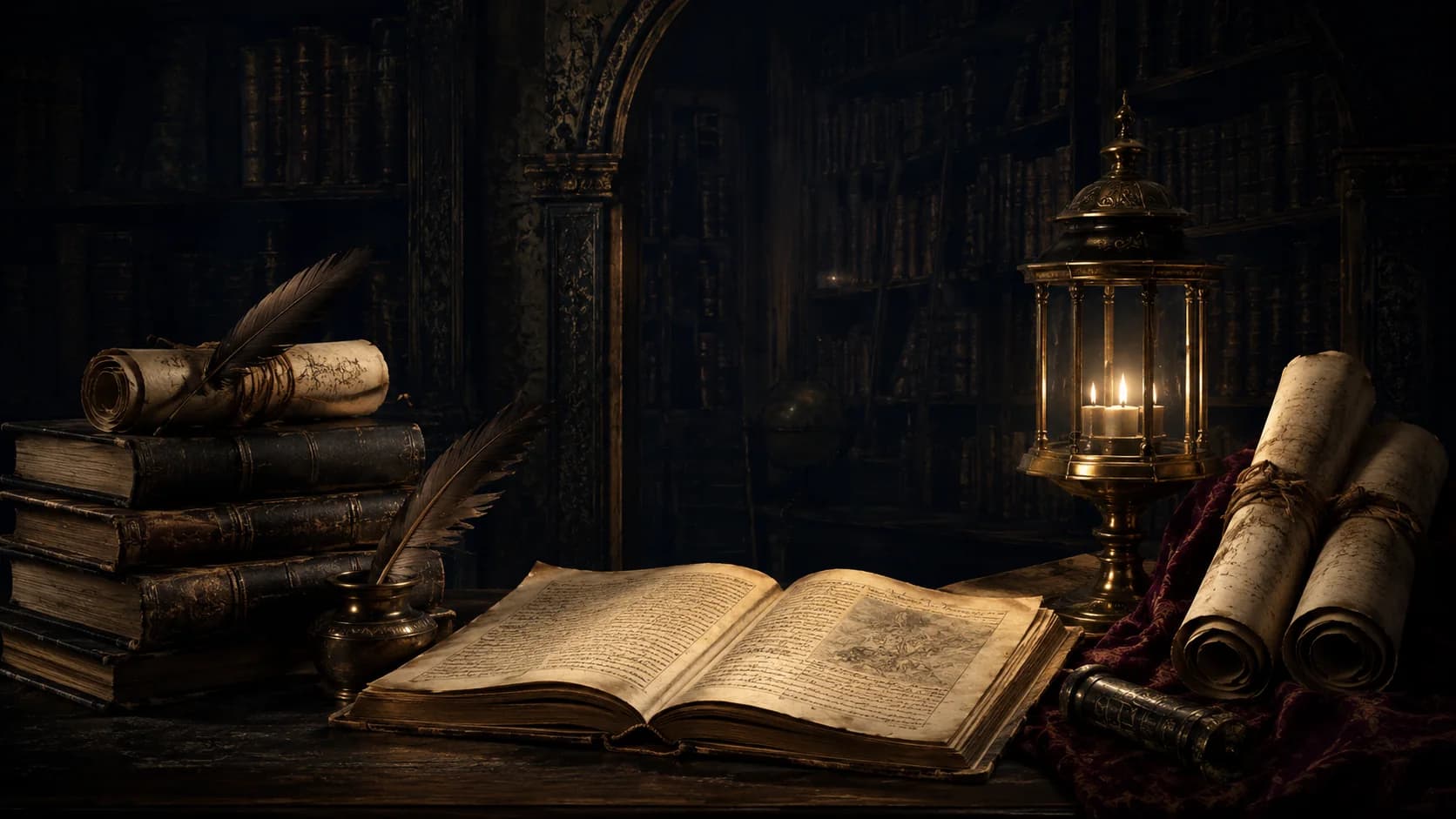
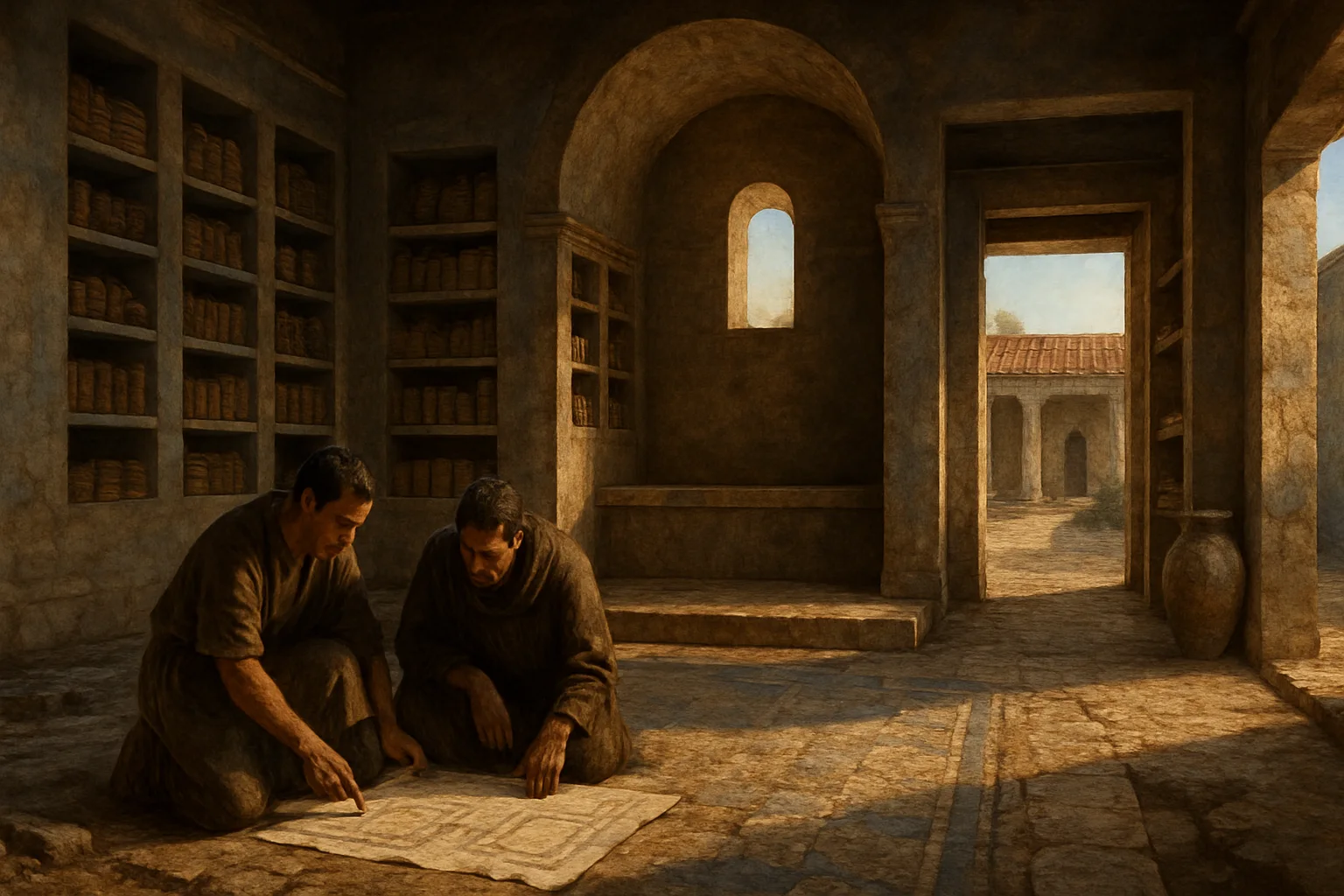
No cache of intact scrolls was newly lifted from the soil, and no inscription labels the room a library. Instead, the discovery is a functional reinterpretation of an already excavated structure. Researchers reconsidered how the hall’s central apse, differently shaped wall niches, raised area and adjoining rooms work together. They concluded that the full arrangement resembles a space designed to store books, display learned identity and support reading more closely than it resembles a cult chamber.
This distinction matters because the organic contents of ancient libraries rarely survive. Papyrus, parchment, wooden cupboards and shelving normally decay, leaving archaeologists to reason from walls, sockets, circulation routes and comparisons with better identified buildings. “Discovery” in this case means recognizing a lost function in surviving architecture, not uncovering a room full of readable Roman books.
Where is Fuente Álamo?
The villa lies about three kilometres from Puente Genil in the fertile landscape of the Roman province of Baetica. Its position was connected to a major rural economy and to routes branching from the Via Augusta toward Antikaria. The archaeological sequence includes earlier bath buildings, a substantial later villa and post-Roman reuse, showing that the site changed function over centuries.
Fuente Álamo is especially famous for mosaics with geometric, mythological and Nilotic imagery. Those floors made wealth and cultural knowledge visible to visitors. A private library would fit this environment: late Roman rural elites were not simply agricultural landlords. Education, literature, rhetoric and the display of intellectual refinement could be central parts of social status.
How can a Roman library be recognised without books?
No single niche proves that a room was a library. Temples, tombs, audience halls and dining rooms could all contain apses and wall recesses. Identification therefore depends on combinations and hierarchy. Known Roman libraries may include repeated wall bays suitable for book cupboards, a central niche for a statue or portrait, space for readers and speakers, and smaller rooms for storage or work.
At Fuente Álamo, rectangular niches and semicircular recesses reportedly form a structured sequence around an apsidal focus. A podium and neighbouring rooms strengthen the comparison. The argument is not that each feature is unique to libraries. It is that their complete arrangement is unusually consistent with the plans of buildings whose library function is better established.
What is shape grammar?
Shape grammar treats buildings rather like sentences composed according to rules. Researchers define which architectural elements are required, which are optional and how they can be combined within a particular building type. Work on ancient libraries has compared apses, niches, main halls, entrances and support spaces to construct a visual grammar of plans ranging from Hellenistic rooms to monumental Roman institutions.
The method is useful where preservation is fragmentary because it turns an intuitive resemblance into a transparent comparison. It does not produce an automatic verdict. Stratigraphy, date, artefacts, access and position within the villa must still be considered. A plan that matches library rules does not by itself reveal the number of books once kept there or prove every aspect of how the room was used.
Why had the room been interpreted as a Mithraeum?
Mithraic meeting places often have elongated, enclosed plans, side benches and a strongly focused sacred end. The unusual form of the Fuente Álamo hall encouraged an earlier cult interpretation. The new study argues that expected Mithraic features are not sufficiently clear and that the distribution of niches is better explained by book storage, learned display and supporting rooms.
Changing a building’s identification is normal archaeological practice. New excavation data, improved dating or a broader architectural sample can overturn a label used for decades. The key question is not whether the former interpretation can be mocked as an error, but whether the library model explains more evidence and survives independent testing.
Why would a private library in Roman Spain matter?
Literary culture in the Roman Empire was not confined to Rome, Athens or Alexandria. Books, teachers and rhetorical education circulated through provincial cities and elite country estates. Yet private libraries are extremely difficult to identify archaeologically. Once the shelves and texts disappear, a study can look like an audience room or shrine.
If the Fuente Álamo interpretation is accepted, it would show a Baetican landowning family making its book collection architecturally visible inside a rural residence. The researchers describe it as the earliest documented library of its kind in Iberia, one of the westernmost in the empire and perhaps the best-preserved private Roman library building outside exceptional sites such as Herculaneum. Such superlatives remain dependent on dating and on which comparative examples are accepted.
What is the possible link to the Declamatio sarcophagus?
The study also draws attention to a sarcophagus recovered in the nineteenth century from nearby Villares del Carril and now held by the Museum of Málaga. Often called the Declamatio sarcophagus, it carries imagery associated with reading, teaching and rhetoric. A bearded man appears with objects such as a scroll and codex that signal participation in literate culture.
The researchers note chronological proximity and a possible visual resemblance between that figure and a person represented in a Fuente Álamo mosaic, previously interpreted as the estate owner. This does not prove that the sarcophagus belonged to the library’s owner. It is a contextual hypothesis suggesting that local elites may have presented educated identity in both domestic decoration and funerary art.
Why did the books disappear?
Roman books were commonly written on papyrus rolls or parchment codices. Unless preserved by desert dryness, waterlogging without oxygen or unusual carbonisation such as that at Herculaneum, these materials decay. Wooden shelves and cupboards vanish as well. An empty architectural shell is therefore the expected archaeological condition of most ancient libraries.
Metal labels, styli, inkwells or carbonised fragments can occasionally strengthen identification, but the public report on Fuente Álamo relies primarily on architecture. The evidence should be described accurately: archaeologists have not recovered the collection itself; they have identified a room that may have been designed to house and display one.
What might the library have contained?
There is currently no inventory, so naming individual authors would be speculation. A wealthy late Roman household could have owned poetry, history, legal texts, Christian works, schoolbooks or rhetorical handbooks. Scrolls and codices may have coexisted, and the collection may have supported tutoring, estate administration, literary performance or the owner’s self-presentation.
The architecture cannot tell us whether the collection held dozens or hundreds of volumes. Niche dimensions, reconstructed cupboards, lighting and traffic patterns may eventually provide constraints. Even a relatively small collection could carry great symbolic weight in a rural villa, where a dedicated room itself advertised access to education and cultural capital.
What questions remain open?
A full publication should clarify the room’s precise phases, how the niches were finished, whether shelf fittings survive, how daylight entered and what the ancillary rooms contained. Microscopic residues, fasteners or writing-related small finds could strengthen the interpretation. It is also unclear whether visitors were admitted for recitations and teaching or whether the room functioned as a restricted family study.
Independent comparison with other Roman libraries will be essential. The lasting importance of the proposal is larger than the headline claim of being “the oldest.” It demonstrates how the geometry of a room can preserve evidence of books and intellectual life after every page has disappeared.
Related reading
For direct traces of everyday literacy in the Roman world, read our analysis of Pompeii graffiti and daily life. To compare how archaeologists identify a temporary Roman structure through its plan, continue with the Šurany marching camp investigation.
Frequently Asked Questions
Is the Fuente Álamo library proven beyond doubt?
The researchers present a strong architectural interpretation, but no surviving books, library inscription or wooden shelving provide direct confirmation. The conclusion is comparative and remains open to scholarly testing.
When was the room used?
It is associated with late phases of the Roman villa. More detailed publication of construction and reuse phases will refine the date.
Why is it called Spain’s oldest Roman library?
The research team argues that it is earlier and architecturally more securely identifiable than other proposed library rooms on the Iberian Peninsula.
Can the site be visited?
The Fuente Álamo archaeological site is open through managed visitor programmes. Current schedules should be checked on the official site.
Has the Mithraeum interpretation been completely disproved?
The new analysis argues that a library explains the architecture better. Final acceptance will depend on detailed publication and independent assessment.
Sources
- Cadena SER, “Descubren en Córdoba la biblioteca romana más antigua de la Península Ibérica,” July 31, 2026.
- Myrsini Mamoli, “A shape grammar for the building-type definition of the ancient Greek and Roman library,” AI EDAM 34, 2020.
- Villa Romana de Fuente Álamo, official archaeological site information.
- Junta de Andalucía, protected archaeological-zone documentation for Fuente Álamo.
- Spanish Ministry of Culture, CER.es, Museum of Málaga sarcophagus collection record.
Frequently asked questions
Where is the Fuente Álamo Roman library?
The room is inside the Roman villa of Fuente Álamo, roughly three kilometres from Puente Genil in Córdoba province, southern Spain.
How was the room identified as a library?
Researchers compared its apse, rectangular and semicircular niches, podium and adjoining service rooms with the architectural grammar of known Greek and Roman libraries.
Were books found inside the Fuente Álamo library?
No. Wooden shelving, papyrus and parchment did not survive; the interpretation rests mainly on architectural form and comparative analysis.
Source trail
Selected references and research starting points
- [object Object]
- [object Object]
- [object Object]
- [object Object]
- [object Object]
The list is a research trail. Specific claims should be checked against the cited edition, object record or publication.
Keep exploring: Use the topic hub for closely related articles or browse the full archive instead of starting a new search.