The Antikythera Mechanism: How Did the Ancient Computer Work?
A detailed guide to the Antikythera Mechanism, its discovery, bronze gears, astronomical displays and status as the world’s oldest known analogue computer.
What is the Antikythera Mechanism?
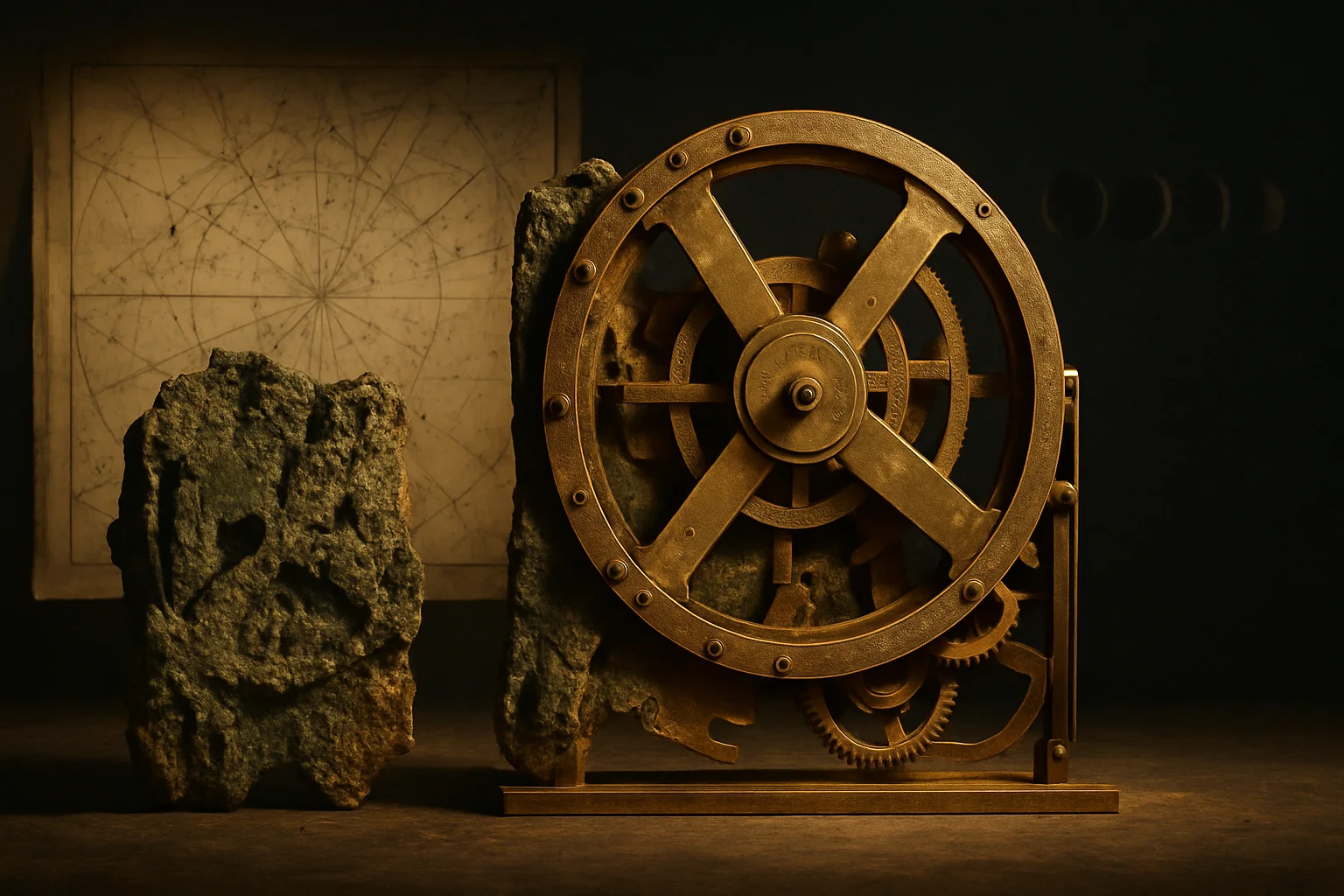
The Antikythera Mechanism is an ancient Greek device built from interlocking bronze gears. It was designed to calculate and display astronomical cycles. Scholars commonly describe it as the oldest known complex geared calculator and the earliest surviving analogue computer. It did not run software in the modern sense, but it encoded mathematical relationships in physical gear ratios and converted a date input into predictions about celestial motion.
The surviving fragments are held by the National Archaeological Museum in Athens. Corrosion has damaged them severely, yet X-ray computed tomography, surface imaging and epigraphic analysis have revealed many internal gears and portions of the tiny Greek inscriptions.
Discovery in the Antikythera shipwreck
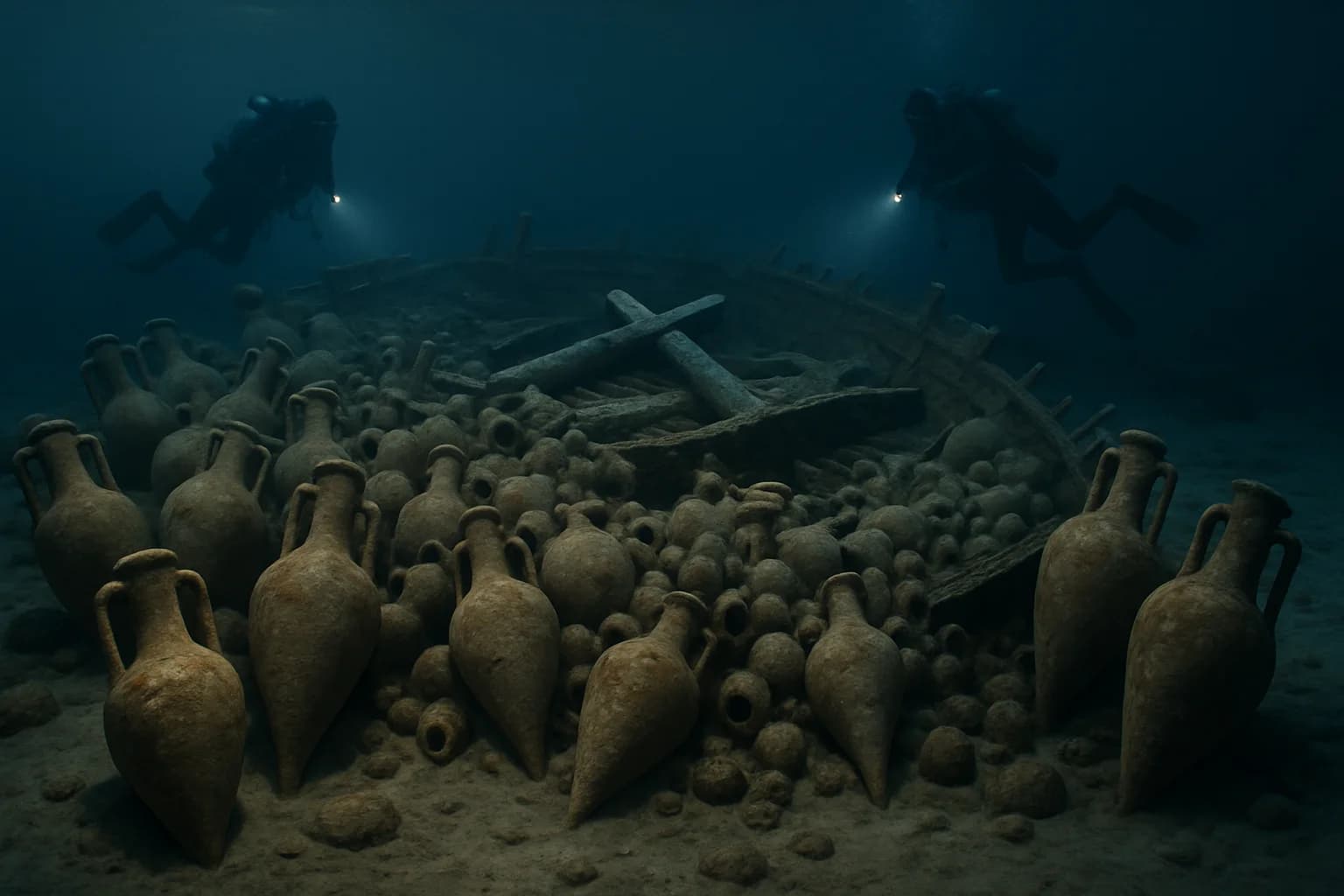
Sponge divers discovered a Roman-period wreck near the Greek island of Antikythera in 1900. Excavators recovered statues, pottery, glassware and luxury cargo. In 1902, archaeologist Valerios Stais noticed gear teeth inside one corroded bronze lump. His observation transformed apparently insignificant fragments into evidence for an exceptionally sophisticated machine.
The wreck and astronomical clues generally place the mechanism’s manufacture between the late second and early first centuries BCE. Its exact date and workshop remain debated. Rhodes, Corinth and other Hellenistic scientific centres have all been proposed, but no attribution is certain.
Why call it an ancient computer?
A computer accepts input, processes it according to rules and produces useful output. A user of the Antikythera Mechanism turned a handle to select a date. The internal gear train then moved pointers at different rates. Dials on the front and back displayed the Sun, Moon, calendar cycles, eclipse possibilities and the timing of major athletic festivals. Several reconstructions also include the five planets visible to the naked eye.
The device was therefore more than a clock. It was a mechanical model of astronomical knowledge. Gear tooth counts encoded cycles such as the Metonic period, the Saros eclipse cycle and variations in lunar motion.
The front dial
The front probably carried a 365-day Egyptian-style calendar ring and a zodiac ring. Pointers indicated the positions of the Sun and Moon. A small black-and-white sphere may have displayed the Moon’s changing phase. An ingenious pin-and-slot arrangement reproduced the Moon’s variable apparent speed, one of the most remarkable engineering features in the surviving system.
The precise planetary display remains disputed because much of the front mechanism is missing. Recent models propose concentric rings for Mercury, Venus, Mars, Jupiter and Saturn. Researchers test these reconstructions against inscriptions, available space, surviving shafts and mathematically plausible gear ratios.
The Metonic and Saros spirals
Two major spiral dials occupied the back. The upper spiral represented the Metonic cycle: 235 synodic months, nearly equal to nineteen solar years. Greek astronomers used this relationship to reconcile lunar months with the solar year.
The lower spiral represented the Saros cycle of roughly eighteen years and eleven days. Solar and lunar eclipses with similar geometry tend to repeat after this period. Cells on the dial contained abbreviated information about expected eclipse type and timing, allowing the user to follow eclipse possibilities mechanically.
How complex was the gearing?
The surviving fragments reveal at least thirty bronze gears, and the original machine probably contained more. Most have fine triangular teeth. Their tooth counts were selected to combine several astronomical periods through compound ratios.
A particularly sophisticated assembly modelled the non-uniform motion of the Moon. Its geometry resembles the lunar theory associated with Hipparchus. That does not prove Hipparchus designed the device. Connections with Archimedes, Posidonius and Rhodian workshops are historically plausible but remain hypotheses rather than established facts.
What do the inscriptions say?
Thousands of tiny Greek letters survive on plates and covers. They function partly as an instruction manual, explaining displays, astronomical phenomena and calendar signs. High-resolution imaging has recovered letters hidden beneath corrosion and inside separated fragments.
The language and letter forms contribute to dating. The text also supports the presence of planetary displays. Understanding the mechanism therefore requires cooperation between mechanical engineers, astronomers, archaeologists, classicists and epigraphers.
Did ancient writers describe similar machines?
Ancient authors mention mechanical celestial spheres. Cicero described devices attributed to Archimedes and Posidonius that reproduced the motions of the Sun, Moon and planets. The Antikythera Mechanism is the only substantial physical survivor of that technological tradition.
Later Byzantine and Islamic engineers developed geared astronomical instruments and clocks, while monumental astronomical clocks appeared in late medieval Europe. The Antikythera find shows that technological history was not a simple uninterrupted progression. Advanced traditions could flourish, disappear and later be reinvented.
How modern researchers study it
Microfocus X-ray tomography reveals structures inside the corroded fragments. Reflectance transformation imaging makes faint surface writing more legible. Digital simulations test whether proposed gear trains fit the available space and reproduce the intended astronomical periods.
There is no single universally accepted reconstruction of every missing component. Planetary gearing is especially uncertain. This disagreement is productive: each model must satisfy archaeological evidence, inscriptions, geometry and ancient astronomical theory at the same time.
Why it matters
The mechanism proves that Hellenistic science was not confined to abstract texts. Craftspeople could translate mathematical astronomy into precision metal components and a working predictive instrument. Its importance lies not only in its age but in the way it changed expectations about ancient engineering.
It also demonstrates the value of archaeological context. Without the shipwreck, inscriptions and modern imaging, the fragments might have remained unidentified lumps of bronze. Their reconstruction offers a rare view of scientific knowledge embodied in an object.
Conclusion
The Antikythera Mechanism stands at the intersection of archaeology, astronomy and mechanical engineering. By representing celestial cycles through gear ratios, it turned a mathematical cosmos into a hand-operated machine. Although important details remain uncertain, the evidence is sufficient to show that ancient Greek technology reached a level of computational sophistication unmatched by any other surviving object from the period.
Frequently asked questions
How old is the Antikythera Mechanism?
It is more than two thousand years old and is usually dated between the late second and early first centuries BCE.
Was it really a computer?
It was not electronic, but it processed date input through fixed mechanical ratios and generated astronomical output, so “analogue computer” is an appropriate description.
Could it predict eclipses?
Its Saros dial tracked the repeating cycle of solar and lunar eclipses and indicated likely eclipse events.
Who built it?
The maker is unknown. Links to Hipparchus, Posidonius, Archimedean traditions and several workshops remain unproven proposals.
Sources and further reading
Frequently asked questions
How old is the Antikythera Mechanism?
It is more than two thousand years old, generally dated between the late second and early first centuries BCE.
Was it a computer?
It was a mechanical analogue calculator that processed date input into astronomical displays.
Could it predict eclipses?
Its Saros dial tracked the recurrence of solar and lunar eclipses.
Who made it?
The designer and workshop remain unknown.
Source trail
Selected references and research starting points
- National Archaeological Museum, The Antikythera Mechanism
- Freeth et al., Nature 444, 2006
- Freeth et al., Scientific Reports 11, 2021
- Antikythera Mechanism Research Project
The list is a research trail. Specific claims should be checked against the cited edition, object record or publication.
Keep exploring: Use the topic hub for closely related articles or browse the full archive instead of starting a new search.