Roman Firefighters’ Barracks Near the Colosseum? The Caelian Hill Discovery
A decorated second-century building in Villa Celimontana may expand the known complex of Rome’s Fifth Cohort of the Vigiles, although an elite domus remains possible.
What exactly was found in Rome?
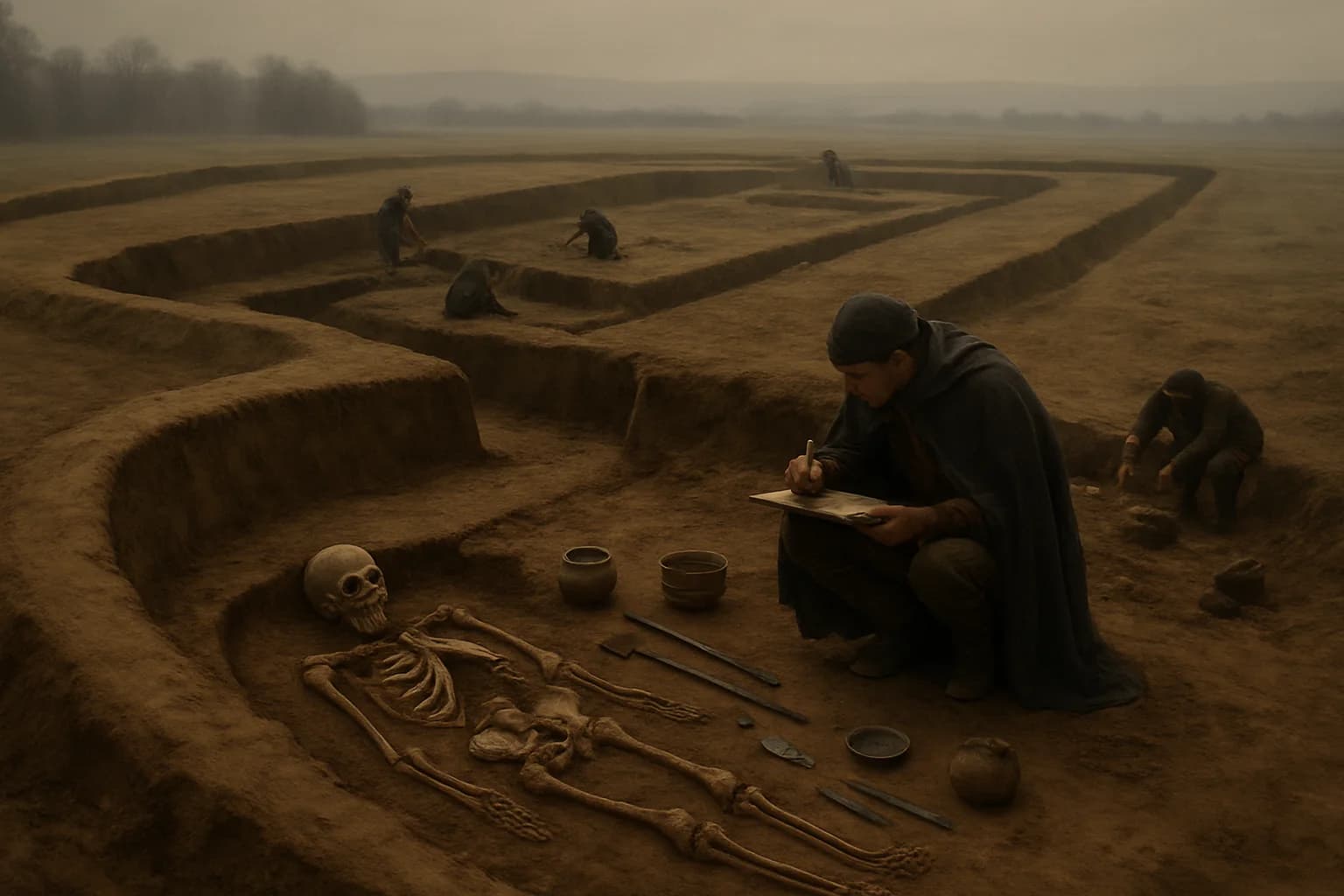
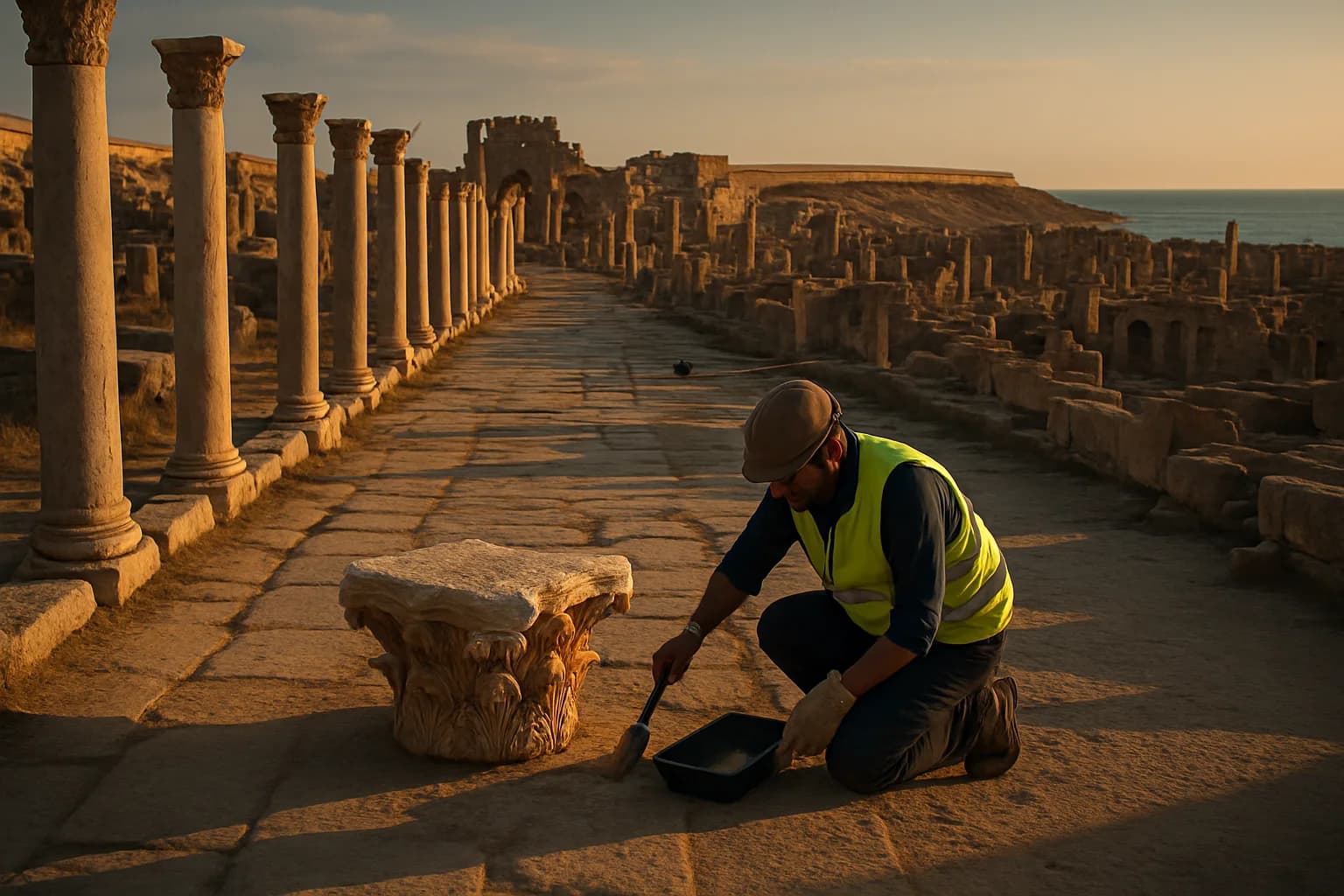
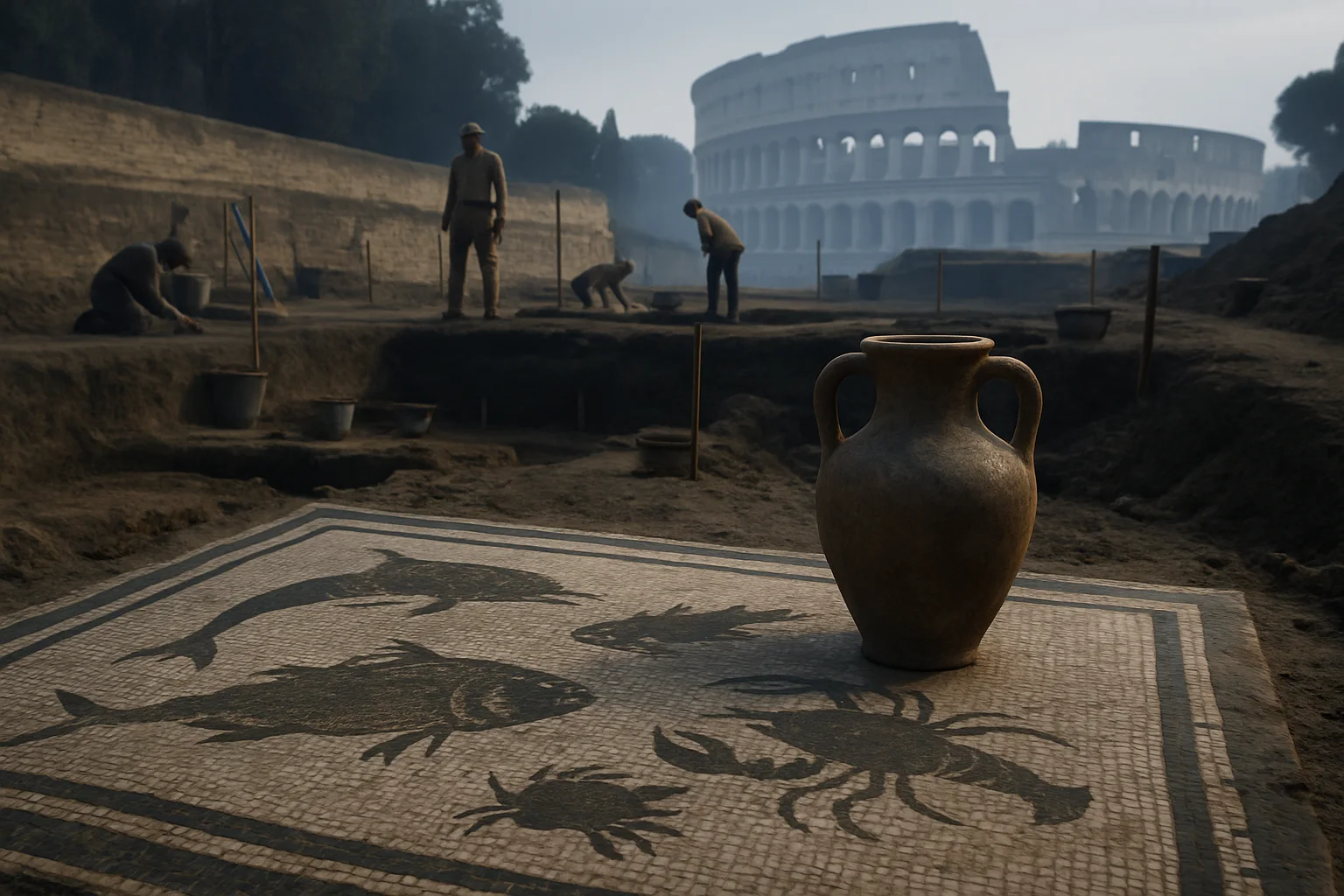
Excavations in Villa Celimontana, on the Caelian Hill southeast of the Colosseum, have exposed an eight-room Roman building. According to Reuters on 5 August 2026, five rooms have so far been fully excavated. Archaeologists documented wall frescoes, traces of a painted ceiling with large red and blue circles, and a mosaic showing a large two-handled vessel surrounded by marine animals including a dolphin, fish, lobster and crab.
The decoration is not the only reason the find matters. Rome’s archaeological authorities say the mosaic composition closely resembles examples from the known Caserma dei Vigili at Ostia Antica. If that comparison reflects institutional rather than merely artistic similarity, the newly exposed rooms could have belonged to the wider complex of the Fifth Cohort of the Vigiles stationed on the Caelian Hill.
Who were the Vigiles?
Fire was a constant threat in ancient Rome. Dense occupation, upper floors built with combustible materials, narrow streets, open flames used for lighting and heating, and workshops embedded in residential districts created ideal conditions for destructive fires. In AD 6, Augustus established a permanent urban force known as the Vigiles. Their responsibilities included firefighting, nightly patrols and aspects of public order.
Calling them simply “firefighters” is therefore useful but incomplete. They formed a disciplined urban service with quasi-military organisation. Cohorts divided responsibility across the city, allowing crews to patrol neighbourhoods, respond to fires and maintain a visible night presence. The history page of Italy’s National Fire and Rescue Service in Rome records the barracks of the Fifth Cohort on the Caelian Hill in the area of Villa Mattei, today Villa Celimontana. Rome’s official tourism portal likewise notes that the nearby church of Santa Maria in Domnica was founded over Roman remains associated with the Fifth Cohort. The new excavation is therefore taking place in an area where Vigiles infrastructure was already historically known.
Why is the Ostia barracks such an important comparison?
The Archaeological Park of Ostia Antica provides one of the clearest surviving examples of a Vigiles headquarters. Its official guide explains that the barracks was established in the late first century AD, when a permanent firefighting force was created for the port city, while the layout visible today largely reflects Hadrianic rebuilding in the first half of the second century.
The complex had at least two storeys and was organised around a porticoed courtyard. Firefighters’ rooms, wash basins and, later, a monumental imperial cult shrine formed part of the complex. Ostia’s warehouses stored goods vital to Rome, so a permanent fire service had obvious strategic importance. Because the new Caelian building is also dated to the second century, similarities in decorative language and organisation deserve serious attention.
Yet visual resemblance is not proof of function. Archaeologists must compare architecture, access routes, water installations, ceramics, inscriptions and small finds. A mosaic can strengthen a hypothesis, but it cannot by itself establish that a room was used by firefighters.
What might the marine mosaic mean?
A dolphin, fish, lobster and crab around a large vessel naturally evoke water. In a building potentially linked to firefighters, that symbolism is tempting. But Roman iconography should not be read as a modern occupational sign. Marine themes were common in baths, gardens, houses and public buildings across the Roman world.
The more responsible interpretation is comparative. The mosaic matters because its design can be examined alongside securely identified contexts such as Ostia. Reuters’ report of the official statement uses exactly this cautious logic: the resemblance supports a possible connection with the Fifth Cohort, while the final interpretation depends on detailed study of the excavated structures and materials.
Why could the building instead be a domus?
The main alternative is that the rooms formed part of an affluent Roman domus. The Caelian Hill contained elite residences as well as military and service installations. Fine frescoes, a painted ceiling and a carefully executed mosaic are entirely compatible with a wealthy domestic setting.
This uncertainty is not a weakness in the excavation. It is how archaeological interpretation works. Building function is reconstructed from multiple categories of evidence: room arrangement, thresholds, drainage, water supply, pottery distribution, metal objects, inscriptions and connections to neighbouring structures. As our earlier investigation of the reinterpreted Roman room at Fuente Álamo showed, the label assigned to an ancient space can change when architectural and contextual evidence is reconsidered.
Why was the Caelian Hill strategically important?
The Caelian is one of Rome’s traditional seven hills and lies close to the Colosseum and Palatine. Villa Celimontana as seen today was largely shaped from the late sixteenth century onward, but the park overlays a much older Roman landscape documented by archaeological and historical sources.
A Fifth Cohort base here fits the geography of an organised urban safety system. Reuters also notes that the known barracks nearby drew water from an aqueduct, an obvious logistical advantage for a firefighting unit. If the newly excavated structure belongs to the same installation, the discovery could show that the Fifth Cohort’s operational complex was more extensive than previously understood.
How could the discovery change our view of Roman military infrastructure?
Popular images of Roman military architecture focus on legionary forts and frontier camps. The capital, however, also depended on militarised service units. The Vigiles, urban cohorts and Praetorian Guard each met different security needs inside or near Rome. A confirmed extension of the Fifth Cohort complex would therefore illuminate the infrastructure of emergency response rather than battlefield warfare.
It also offers a useful contrast with the Šurany Roman marching camp examined in our archive. Šurany represents temporary campaign logistics beyond the imperial frontier system; the Caelian site may represent a permanent municipal security organisation operating at the heart of the capital.
How was the excavation funded, and what happens next?
Reuters reports that the excavation was partly funded through European Union post-pandemic recovery resources. Italian cultural administration records also list PNRR/Caput Mundi conservation work at Villa Celimontana. Large restoration programmes can create opportunities to investigate archaeological layers that would otherwise remain inaccessible beneath historic parks and later monuments.
The next stage will be decisive. Specialists will date ceramics, separate construction phases, study drainage and water systems, compare mosaic technique, and examine any stamped bricks, inscriptions or tools. An inscription naming the Fifth Cohort, or a cluster of material securely associated with Vigiles activity, would greatly strengthen the identification. Conversely, domestic assemblages and residential planning could favour the domus interpretation.
Why the cautious wording matters
Archaeology headlines often turn a hypothesis into a certainty before excavation teams do. Here, the distinction is particularly important. The evidence currently supports “a building that may have belonged to the Fifth Cohort of the Vigiles,” not “Rome’s fire station conclusively discovered.” The official position, as reported by Reuters, explicitly states that only thorough study of the excavated materials and structures will clarify the building’s identity.
That caution is useful: topography, decorative parallels and material evidence can now be tested against competing explanations. Either interpretation adds an important second-century structure to the archaeological map of the Caelian Hill.
Conclusion: a promising clue to Rome’s ancient emergency service
The Villa Celimontana building is a strong candidate for part of Rome’s Fifth Cohort Vigiles complex because of its date, location and mosaic parallels with Ostia. At the same time, its sophisticated decoration is consistent with a wealthy domus, and researchers have not closed that alternative. If future analysis confirms the Vigiles interpretation, the discovery could significantly revise estimates of the size and organisation of one of imperial Rome’s most important urban service installations. For now, its value lies precisely in the combination of a compelling hypothesis and an evidence trail that can still be tested.
Frequently asked questions
Was a Roman fire station definitely found near the Colosseum?
No. Archaeologists consider a link to the Fifth Cohort of the Vigiles plausible, but an elite domus remains an alternative interpretation.
What did the Vigiles do?
They fought fires, patrolled Rome at night and performed certain public-order duties as a permanent organised urban force.
Where was the building found?
It was excavated in Villa Celimontana on the Caelian Hill, not far from the Colosseum and the historically known area of the Fifth Cohort barracks.
Why is the mosaic important?
Its marine composition resembles decorative evidence from a known Vigiles barracks at Ostia, providing a useful comparative clue but not definitive proof.
Sources and further reading
- Reuters — Ancient Roman firefighters' barracks may have been found near Colosseum, 5 August 2026.
- Corpo Nazionale dei Vigili del Fuoco, Rome — History, historical locations of the Vigiles cohorts.
- Archaeological Park of Ostia Antica — Caserma dei Vigili.
- Sovrintendenza Capitolina — Villa Celimontana.
- Turismo Roma — Santa Maria in Domnica alla Navicella.
Frequently asked questions
Was a Roman fire station definitely found near the Colosseum?
No. A link to the Fifth Cohort of the Vigiles is plausible, but archaeologists also consider an elite domus.
What did the Vigiles do?
They fought fires, patrolled Rome at night and performed certain public-order duties as a permanent organised urban force.
Where was the building found?
It was excavated in Villa Celimontana on the Caelian Hill, near the historically known area of the Fifth Cohort barracks.
Why is the mosaic important?
Its marine composition resembles decoration from a known Vigiles barracks at Ostia, providing a comparative clue but not definitive proof.
Source trail
Selected references and research starting points
- Reuters, Ancient Roman firefighters’ barracks may have been found near Colosseum, 5 August 2026
- Corpo Nazionale dei Vigili del Fuoco, Rome Command, History
- Archaeological Park of Ostia Antica, Caserma dei Vigili
- Sovrintendenza Capitolina, Villa Celimontana
- Turismo Roma, Santa Maria in Domnica alla Navicella
The list is a research trail. Specific claims should be checked against the cited edition, object record or publication.
Keep exploring: Use the topic hub for closely related articles or browse the full archive instead of starting a new search.